
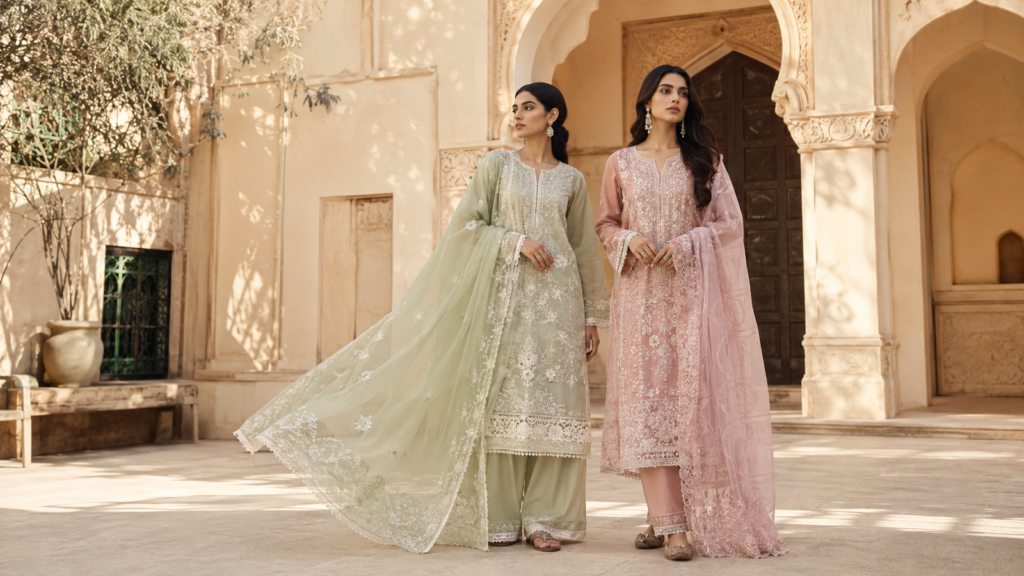
A separate embroidered border offers design possibilities, but it also creates decisions that need to be made before fabric is cut. The same strip may look different at a shirt hem, sleeve opening or neckline. Rather than asking the tailor to use it somewhere attractive, map the supplied pieces and decide which placements matter to you. This makes the design easier to explain and avoids accidental compromises.
Inventory the decoration first
Photograph every border and patch separately. Record the quantities and dimensions provided by the seller, then ask the tailor to assess their usable lengths and any construction allowances. Keep pairs together so a sleeve border is not mistaken for unrelated trim.
Do not assume every strip can be moved freely. A motif’s direction, shape or intended join may affect the available options. Ask about those constraints while the pieces are still intact and you can consider alternatives.
Mark the outfit’s main feature
Choose where you want the strongest detail to appear. If the hem is the focal point, plan the shirt length and side view around it. If the sleeves matter most, check what will remain visible beside your usual dupatta and jewellery.
Use a simple sketch with front, back and sleeve areas. Place photographs of the borders beside the relevant zones or label them with letters. This does not replace the tailor’s pattern work; it records the visual decisions you want assessed.
Discuss one layout problem at a time
Imagine that a border is long enough for your proposed front treatment but not the continuous arrangement shown in an inspiration image. Ask the tailor for the feasible options. You might keep the emphasis at the front, choose a different arrangement or obtain approved additional material.
Request an explanation of where joins would appear. A join near a side opening may have a different visual effect from one in the centre of a repeated motif. Decide what you prefer after seeing the proposed layout rather than assuming it will be invisible.
Confirm what may change
- Which border must remain in its original position?
- Which pieces can be reassigned with your approval?
- Where will any joins sit?
- Is extra trim included in the quotation?
- What happens to unused supplied pieces?
If the shirt length depends on a fixed border, read planning length around the hem. The tailoring brief guide helps keep border decisions alongside fit and construction preferences.
Identify any intentionally different left and right details so their placement is not mistaken for a matching pair.
Before cutting, photograph the agreed arrangement and identify the parts that are still undecided. Browse unstitched clothing with this planning stage in mind. Decorative pieces are most useful when their placement supports the finished outfit, rather than being allocated only after the main shape has already been fixed.
Continue exploring Tailoring & Fit or browse the Feyorawears Style Journal.
Featured image: Feyorawears editorial illustration.