
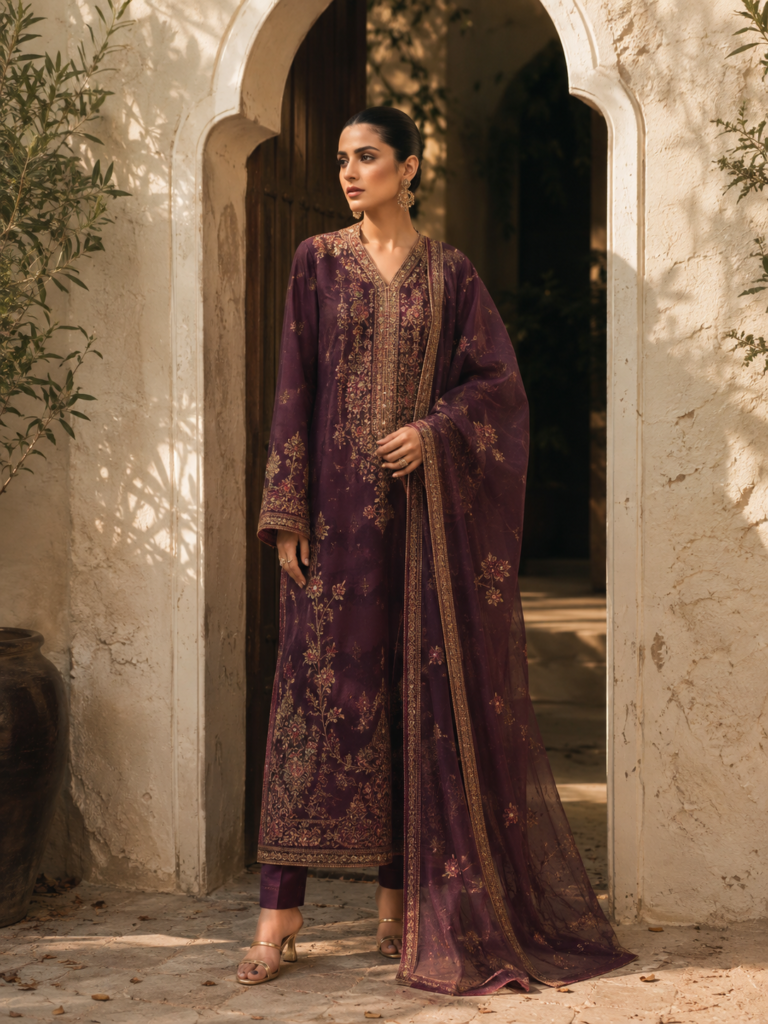
An afternoon ceremony followed by dinner can be easier with one complete outfit and one optional change. Choose the base combination for the longest part of the day, then decide whether the evening needs a different focal point.
Find the overlap between the two settings
Read the event information and note any dress guidance. Consider the venues, the time between them and whether you will have somewhere to change. If the settings are similar, you may not need a transition at all.
Begin with a shirt and trousers that feel comfortable sitting and moving. A close colour combination can provide a calm base for either a printed dupatta or a more decorative accessory. For example, a plum suit could support a simple daytime finish and earrings for dinner.
Choose only one change
You could exchange a daytime dupatta for one with a stronger border, add earrings or remove a practical outer layer. Pick the change that creates the difference you actually want. Changing every accessory defeats the purpose of keeping one outfit.
Test both versions together before the day. If the evening jewellery catches on the neckline, it is not a useful upgrade. If a second dupatta needs different underlayers or constant adjustment, choose a smaller change instead.
Make the daytime version complete
Do not treat the afternoon outfit as unfinished while waiting for dinner. Arrange the dupatta, choose the bag and check the shoes as a full combination. You should feel ready for photographs and conversation in either version.
One example is a detailed shirt with small earrings during the day and no additional jewellery at dinner, simply arranged with a different drape. The change can be subtle. It does not have to make the outfit more elaborate.
Pack a transition kit you can actually carry
- Put the optional accessory in a protective pouch.
- Include a place for anything you remove.
- Keep the kit small enough for your planned bag.
- Leave out items that require a complicated change of clothes.
If you need a separate large bag just for the transition, reconsider the plan. You may prefer to wear the evening accessory from the start or leave the outfit unchanged. A simpler kit is easier to keep track of during a busy celebration.
Use the interval to check comfort
Before adding the evening detail, check the basic fit. Restore the dupatta arrangement, make sure the waistband is comfortable and look at the trouser hems. A practical adjustment may improve how the outfit feels more than another accessory.
Choose a transition because it serves your day, not because an outfit must change after sunset. Explore women’s essentials if a finishing piece is genuinely missing. Read changing an outfit’s focal point and building a small desk-to-dinner kit for related ideas.
Continue exploring Occasion Dressing or browse the Feyorawears Style Journal.
Featured image: Feyorawears editorial illustration.