
A shoulder concern can be difficult to explain if the only description is that a kurta looks wrong. Before requesting an alteration, observe the garment while standing naturally and moving as you normally would. The goal is to give the tailor a clear account of what you see and feel. You do not need to diagnose a pattern problem or prescribe a repair from a photograph.
Start without pulling the garment into place
Put the kurta on with the layers you intend to wear underneath. Let it settle, then look at the front, back and both sides. Avoid lifting one shoulder or repeatedly tugging the hem to improve the mirror image. Those adjustments can hide the behaviour you want assessed.
Notice whether the left and right sides appear similar and where the visible shoulder or sleeve seams sit. Record the observation without assuming that every seam must occupy the same position; different designs can place them differently.
Separate appearance from movement
You may dislike the outline while finding the garment easy to move in, or like the standing view but notice pulling when reaching forwards. These are different concerns and should be described separately. Try the ordinary actions that matter for your use, such as sitting at a desk or lifting an arm to adjust a dupatta.
Stop any movement that feels uncomfortable. The fitting is a conversation about clothing, not a test of how much restriction you can tolerate. Explain where the sensation occurs and which action produces it.
Bring one useful comparison
Choose a kurta whose upper fit you like and tell the tailor exactly what you prefer about it. Perhaps its neckline stays where you want during movement, or the sleeves feel easier when reaching. Do not assume copying its shoulder measurement alone will reproduce the complete result in a different design.
For example, a relaxed reference shirt and a more fitted candidate may have different intended seam positions. Ask the tailor to assess the whole construction rather than treating one visible line as a universal standard.
Request an assessment before a change
- Describe the standing appearance that concerns you.
- Demonstrate the movement that changes the fit.
- Show the reference garment and explain the relevant feature.
- Ask which alteration options are practical for the actual garment.
- Confirm effects on sleeves, neckline or decoration before proceeding.
Use comparing sleeve measurements if a drop-shoulder or set-in description is causing confusion. The first-fitting checklist helps organise observations without changing several decisions at once.
Explore unstitched sets when you want a new garment planned around a clear fit brief. Whether tailoring from scratch or altering an existing kurta, accurate observations give a professional a better starting point than an unsupported diagnosis.
Continue exploring Tailoring & Fit or browse the Feyorawears Style Journal.
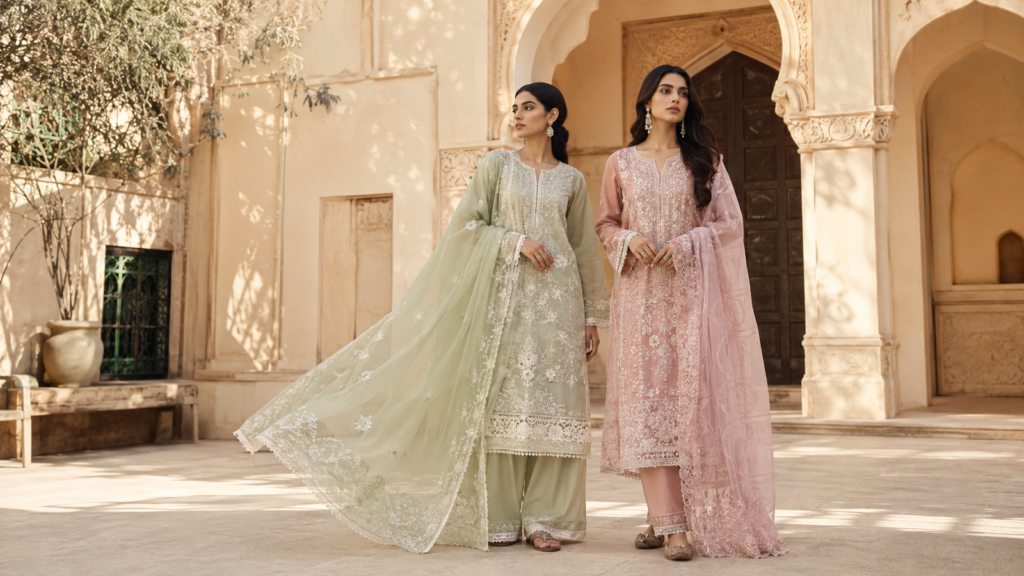
Featured image: Feyorawears editorial illustration.