
Sleeve comfort involves more than the distance from shoulder to cuff. The opening, fastening and position around your wrist affect how you use your hands throughout the day. Before finalising a daily-wear kurta, try the activities you expect to do in it. A few specific observations can produce a better tailoring conversation than simply asking for loose sleeves.
Begin with a familiar cuff
Choose a garment whose sleeve opening you like and note why it works. Perhaps you can put it on easily, it stays clear of your hand, or it accommodates a watch without repeated adjustment. Record those qualities separately from its decorative appearance.
If you measure the reference, write down exactly where and how the figure was taken. A laid-flat opening and a full circumference are different descriptions. Share the method with your tailor or compare it with the seller’s measurement diagram before relying on the number.
Test daily actions in the planned outfit
Sit at a table, reach forwards and bend your elbows naturally. Try the watch or bracelet you intend to wear. Notice whether the cuff moves to a place you dislike or whether its fastening needs adjustment during ordinary actions.
For a work outfit, include the practical activities of your own day. Someone who spends hours at a desk may have different cuff preferences from someone who mainly wears the suit for short visits. The decision should reflect the wearer rather than a general rule about one sleeve shape.
Review access as well as appearance
Ask how the hand passes through the opening and whether a fastening is part of the design. If there are buttons, loops or another closure, try them where possible and explain any difficulty before the garment is finished.
Imagine you like a narrow decorated cuff but find the proposed opening inconvenient. The tailor may be able to discuss suitable construction options for that actual design. Ask what each option changes visually and practically instead of prescribing a repair without seeing the constraints.
Protect the decoration plan
If the cuff includes a fixed border or separate patch, discuss its position before altering the opening or sleeve length. Keep the agreed design visible in the tailoring notes so a fit adjustment does not unexpectedly move the detail you wanted to show.
The embroidered-border planning guide helps allocate decoration before cutting. If the sleeve starts from a different shoulder position, review how sleeve measurement methods differ before comparing lengths.
If you change a fastening during the fitting, ask to review the opening again with that change in place.
Browse unstitched clothing with a clear cuff brief: preferred opening, finished position and any fastening you want assessed. The small area around the wrist deserves attention because it is part of almost every movement you make while wearing the outfit.
Continue exploring Tailoring & Fit or browse the Feyorawears Style Journal.
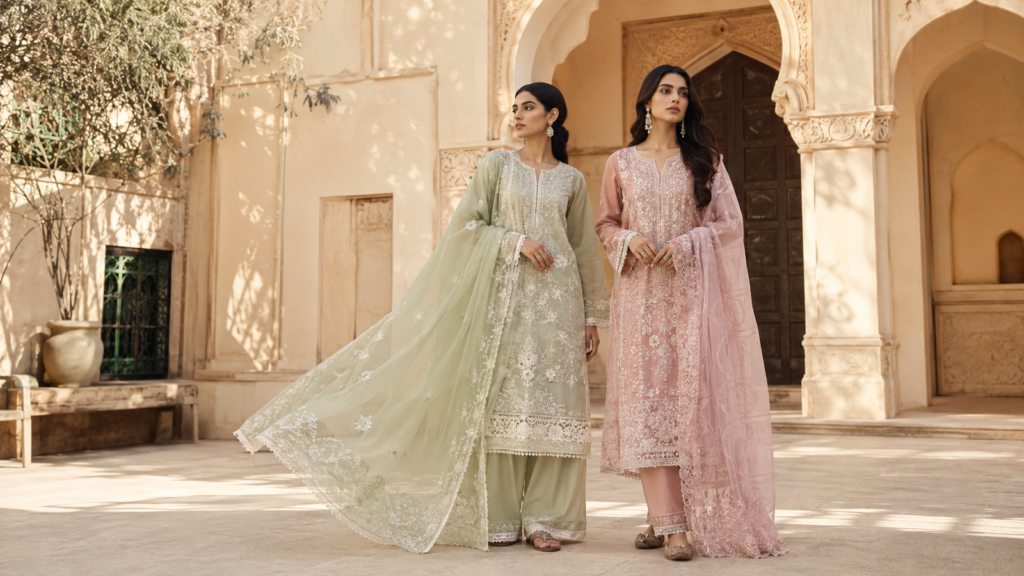
Featured image: Feyorawears editorial illustration.