
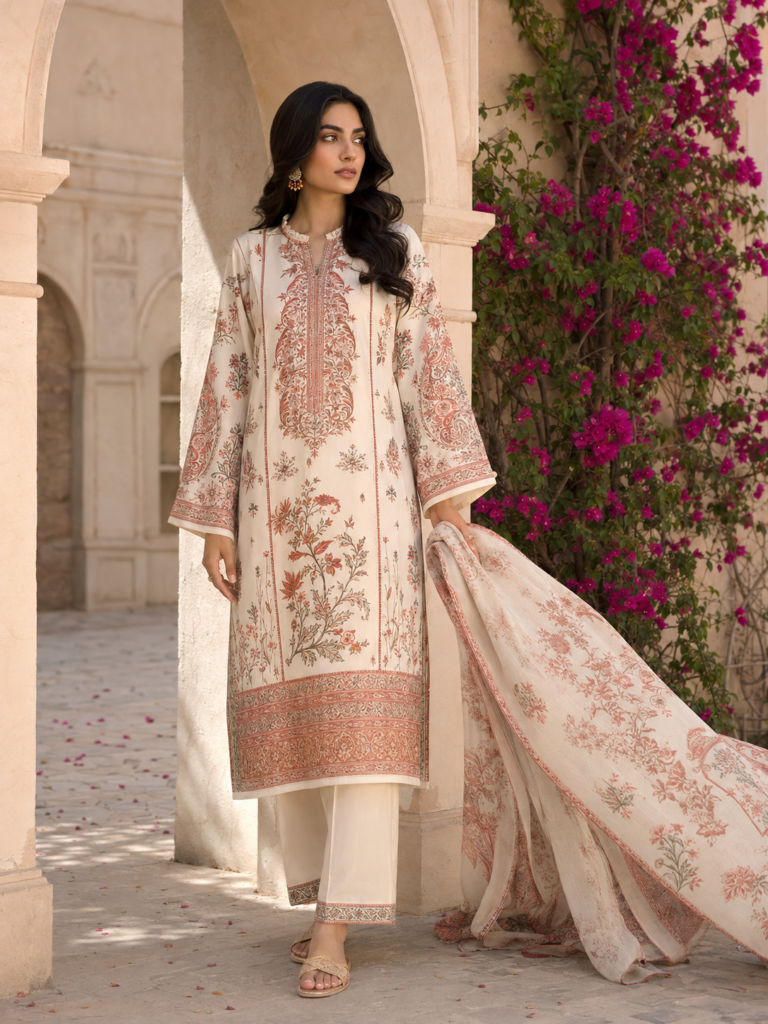
A two-piece suit is not automatically a shirt and trousers, and a three-piece label does not tell you whether the outfit arrives stitched. Before choosing between them, translate the listing into a simple list of what you will receive. That one step can prevent buying an outfit with a missing component you expected to be included.
The right choice depends on how you dress, what you already own and which pieces you want to coordinate yourself. Start with the contents, then compare the complete outfits you could make.
Separate the piece count from the stitching status
“Two-piece” and “three-piece” describe a count. “Unstitched” and “ready-to-wear” describe a different aspect of the purchase. Read both parts of the description. A fabric bundle may still need cutting, stitching and finishing before any part can be worn.
A two-piece listing might pair a shirt with trousers or a shirt with a dupatta. A three-piece suit often brings those three components together, but the written item list should confirm the exact contents. Accessories, extra trims or lining should only be treated as included when the seller says so.
Our unstitched versus ready-to-wear guide explains how the stitching decision affects time, measurements and budget.
Make an inclusion checklist for each option
Instead of keeping the information in your head, write one line per component. For unstitched purchases, add the length and width beside each fabric piece. For finished garments, record the available measurements and the size you are comparing.
| Component | Detail to confirm |
|---|---|
| Shirt | Finished garment or fabric; front, back and sleeves supplied |
| Trousers | Included or separate; stitched style or fabric dimensions |
| Dupatta | Included or separate; dimensions, material and finishing |
| Lining and trims | Supplied, already attached, or an additional purchase |
Do not use the model’s complete styling as the packing list. Shoes, jewellery, bags and layers may be there to present an outfit. Where imagery is illustrative, ask about the actual items rather than expecting every visible detail to be supplied.
Choose two pieces when you want to use existing separates
A two-piece option can suit you if the missing component is already in your wardrobe. A shirt-and-trouser combination might work with several dupattas you own. A shirt-and-dupatta pairing may be useful if you have trousers in a suitable colour, cut and length.
Check those existing items before purchasing. Hold them together in daylight if you can, or compare their actual colours and proportions carefully. Two items described as ivory may still look different together. You can choose a deliberate contrast rather than trying to create a close match that does not quite work.
Also consider the silhouette: a longer shirt and wide trousers create a different outfit from a shorter tunic and straight trousers. Choose the balance you enjoy, rather than assuming any neutral separate will work equally well.
Choose three pieces when coordinating them together is useful
A three-piece set may simplify choosing a shirt, trousers and dupatta that were presented as one combination. That can be helpful if you want to build a complete outfit from the start, or if you regularly wear all three components together.
Still assess each piece on its own. You may like the shirt print but prefer a different dupatta length or trouser cut. For an unstitched set, confirm that the supplied fabric supports your plan. For ready-to-wear, check the measurements of the trousers as well as the shirt.
Compare the cost of the outfit you will actually wear
Add the listed price, tailoring or alterations, any missing component and delivery. If you already own the separate you need, there may be nothing extra to buy. If you do not, price that purchase before deciding that a two-piece option is cheaper overall.
Think about repeated use too. Three pieces that you will mix into several outfits may offer more use than a set worn only together. Equally, there is little reason to pay for a component you know you will consistently leave in the wardrobe.
Finish with fit and care checks
Use our measurement guide for ready-made pieces, and ask your tailor to check fabric quantities for an unstitched design. Read the care information for each material in the set; do not assume every component should be treated identically.
Compare the unstitched collection with the ready-to-wear collection, using the written contents as your starting point. If anything is unclear, ask feyorawears on WhatsApp for the exact inclusions before placing your order.