
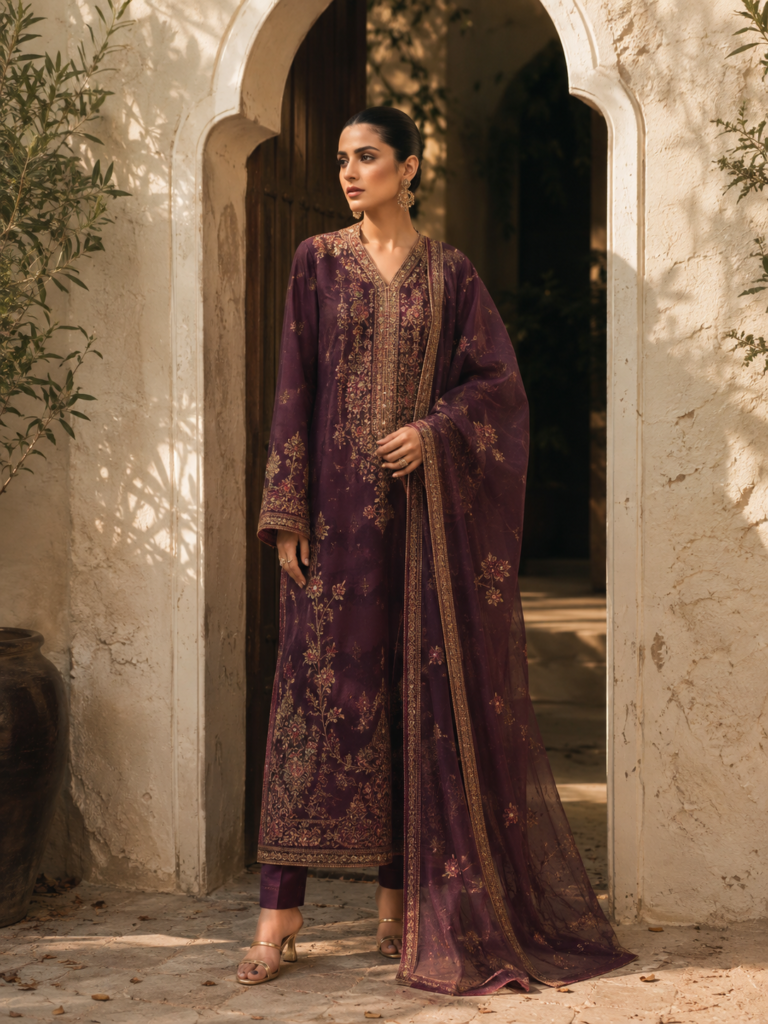
Family celebration outfits can look connected without becoming identical. A shared colour idea is often enough. Let each person choose their own silhouette, coverage and amount of decoration so the plan remains comfortable for the people wearing it.
Agree on the purpose of coordinating
You might want a family photograph that feels cohesive, or simply enjoy choosing clothes together. Name that purpose before discussing purchases. It makes it easier to decide which details actually need coordinating and which can remain individual.
Use the invitation and any host guidance first. Then ask each person what they already want to wear. A coordination plan built around existing favourites is usually easier to complete than one requiring everyone to find the same unusual shade.
Choose a colour family, not an exact match
Try a group such as blue, cream and a small rose accent. One person could wear a blue suit, another a cream outfit with blue detail, and another a printed piece containing both. The relationship is visible even though the clothes are different.
Alternatively, agree on warm neutrals with one brighter accent. Lay the actual garments together if possible. Photos sent through different phones can help with the general idea, but avoid demanding an exact match from screens alone.
Share the level of formality
Similar formality can connect outfits more effectively than identical colours. If everyone expects a relaxed lunch, one person’s heavily detailed evening outfit may feel different from the rest. That is a conversation about preferences and plans, not a judgement about the garment.
Ask whether the group wants mostly simple clothing, a mixture of prints and solids, or a more dressed-up appearance. Leave room for someone who prefers a quieter outfit. They can participate through colour or an accessory without changing their personal style.
Avoid turning one person’s outfit into the rule
If somebody already has a favourite statement piece, identify a colour others could echo rather than requiring everyone to reproduce its design. A patterned dupatta, for example, might offer several colours from which the group can choose.
Each person should still check their own fit and movement needs. The family plan cannot tell you whether a sleeve is comfortable or a trouser hem works with your shoes. Finish those decisions individually.
Set an easy stopping point
- Confirm the shared colour idea in a short message.
- Ask everyone to choose from their wardrobe first.
- Check the overall mix once, rather than repeatedly revising it.
- Accept small shade differences and personal accessories.
Once the plan feels connected, stop adding requirements. The celebration should not become a search for perfectly identical fabric. Compare ready-to-wear outfits only where someone has an actual gap. See planning a family portrait outfit and using a colour from a print for two different ways to develop the palette.
Continue exploring Occasion Dressing or browse the Feyorawears Style Journal.
Featured image: Feyorawears editorial illustration.