
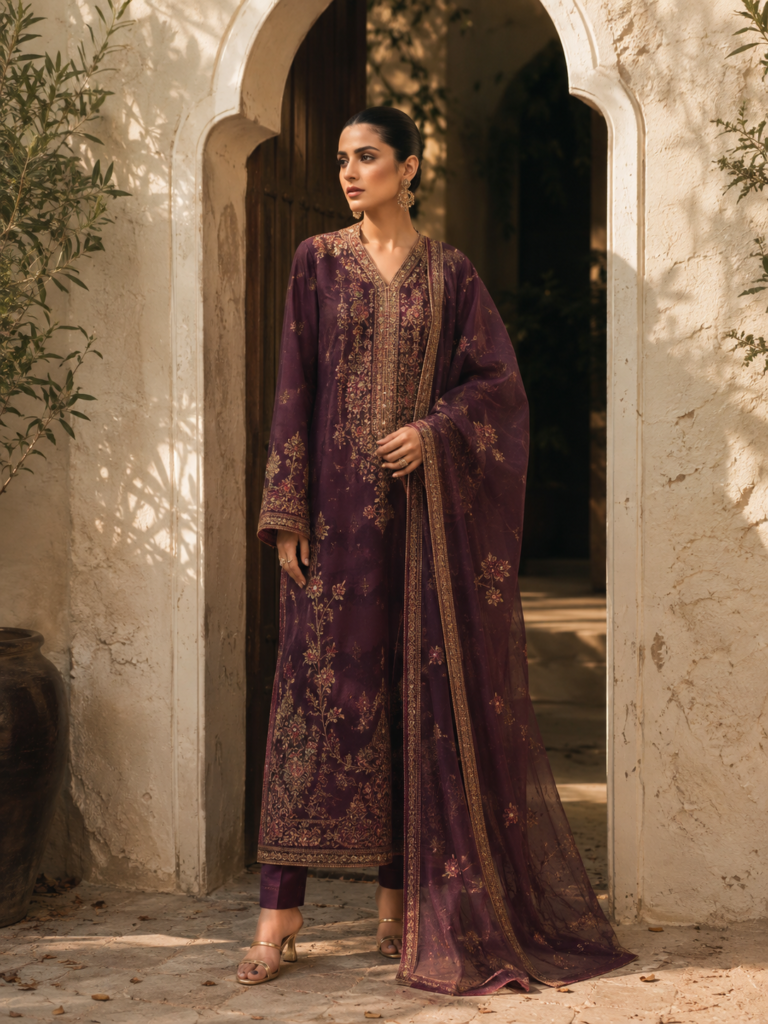
Three wedding invitations within one celebration do not automatically require three new outfits. Start by separating the events’ practical needs, then see which pieces can appear more than once. Repetition can be planned instead of treated as something to hide.
Make a three-column outfit map
Write the events across a page. Under each, note the venue, expected activities and any guidance from the hosts. Add your own preferred level of detail. This stops the most elaborate event from dictating every outfit.
Now list the clothing you already have that fits comfortably. Include useful trousers and dupattas, not just complete sets. Check that each piece is ready to wear or identify the care or repair it needs before putting it into the plan.
Choose one repeating anchor
A plain pair of trousers can connect several shirts. A versatile dupatta can finish a quieter suit at one event and support a detailed shirt at another. Pick the anchor because it works in the combinations, not because you have decided everything must match.
For example, navy straight trousers might work with a printed shirt for a relaxed gathering and an embroidered blue shirt for dinner. A rose dupatta could then finish a third outfit in cream. The repeating pieces are familiar, while the overall combinations differ.
Vary the area that attracts attention
At the first event, let a print be the main detail. At the second, place attention at the neckline. At the third, use the dupatta’s colour or border. This gives you a clear styling decision without requiring a new bag and shoes for every occasion.
Try the accessories you already own before adding anything. The same small earrings may work with all three combinations. If a statement piece competes with one outfit, leave it out there rather than trying to make it a requirement.
Account for the interval between events
A repeating piece must be available and in suitable condition when you need it again. If the events are close together, avoid relying on one garment that may need care between wears. Follow its label and make a realistic plan, rather than assuming an overnight turnaround.
Keep a spare combination in mind if practical. It can be a complete outfit already in your wardrobe, even if it does not follow the colour map exactly. Reliability is more useful than a plan that works only if every detail goes perfectly.
Photograph and label each combination
- Take one photo per event with shoes included.
- List the smaller accessories beside the photograph.
- Mark any item used twice so it is easy to find.
- Recheck the full outfit after any alteration.
Compare women’s essentials only for a clearly identified gap. For more planning help, read repeating a suit with a different focal point and making a packing list for family celebrations.
Continue exploring Occasion Dressing or browse the Feyorawears Style Journal.
Featured image: Feyorawears editorial illustration.