
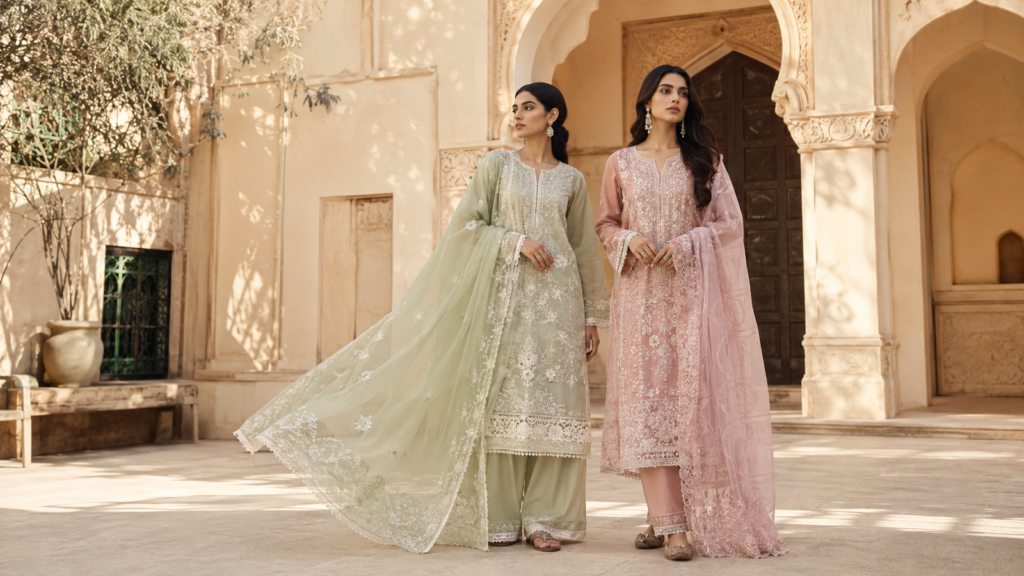
Kimono sleeves can describe an appealingly open-looking outfit, but the label alone does not tell you exactly how a particular garment is cut. Look at the actual shape and ask how its measurements are taken. Then assess the movements and coverage that matter to you. A useful fitting conversation is about the specific garment on your body, not a promise attached to the sleeve name.
Identify the shape shown in the listing
Request a front view with the arms resting naturally and another that shows the sleeve outline clearly. If the garment is photographed only in a dramatic pose, ask for an ordinary standing view before judging its everyday proportions.
For tailoring, point out the feature you want from the reference image. You may like the sleeve’s visual width but prefer a different opening or length. Name those details separately so the tailor can explain how the proposed construction would work.
Test the reach you actually use
Try reaching forwards as if placing something on a table, lifting your arms to arrange a dupatta and sitting with your hands in your lap. Notice how the sleeve, shirt body and hem move together. Do not force an uncomfortable stretch in order to complete a test.
Record the actions that cause an unwanted change. For example, you might prefer more consistent coverage at the side while reaching, or a cuff that stays away from your hand during a meal. These are concrete observations a tailor can assess.
Check coverage from more than one angle
Look at the front and side views with the arms relaxed and during ordinary movement. Consider your intended layers and the situations in which you will wear the outfit. Your preferred coverage may differ between a private gathering and a working day, and the brief should reflect that preference.
If a separate layer is part of the plan, try it during the fitting rather than adding it only after the garment is complete. Ask the tailor whether it changes the proposed measurements or construction decisions.
Keep the cuff question separate
A sleeve can have the outline you enjoy while its opening or length still needs discussion. Ask where the finished cuff is intended to fall and how its measurement is recorded. Avoid solving every concern by choosing a larger size or adding length without an assessment of the full shape.
Use the cuff comfort guide for daily activities involving the hands and wrists. The seated comfort checklist adds another perspective when reviewing the completed suit.
Explore unstitched sets with a short movement brief beside your reference picture. A distinctive sleeve shape becomes a more useful design choice when its reach, coverage and finished opening are considered together before final construction.
Continue exploring Tailoring & Fit or browse the Feyorawears Style Journal.
Featured image: Feyorawears editorial illustration.