
A first fitting is easier to use well when you arrive with a short list of priorities and the items that affect the outfit. It is a chance to observe the garment in progress, discuss concerns and confirm the next decisions. You do not need to evaluate everything at once or diagnose every construction issue. A systematic review gives the tailor clearer information and gives you a record of what was agreed.
Bring the items that change the comparison
Take the shoes, relevant underlayer and any reference garment discussed in the original brief. Bring the dupatta or shawl if its arrangement affects the neckline, sleeve or overall proportions. Keep the component photographs and written decisions accessible.
Check with the tailor what stage the garment will be at and what can usefully be reviewed during that appointment. Some details may still be unfinished. Understanding the stage prevents judging a temporary construction feature as though it were the completed design.
Look at the whole outfit first
Put the garment on and let it settle naturally. View the front, sides and back before focusing on small details. Notice the overall length, outline and relationship between the shirt and trousers. Do not repeatedly tug pieces into place before the tailor can see the behaviour that concerns you.
Explain your main impression in plain language. For example, the shirt is longer than I intended with these shoes is more useful than saying the outfit is wrong. Refer back to the written priority when a preference needs clarification.
Review one area at a time
Move through the shoulders and neckline, sleeves, shirt body, side openings, waistband and hems. Separate appearance from movement. A detail can look right standing still while needing discussion when you sit or reach.
Try ordinary actions relevant to the outfit: sitting at a table, walking and carrying the planned bag. Demonstrate a concern without forcing an uncomfortable movement. Ask the tailor to assess the cause rather than prescribing several alterations at once.
Record the agreed changes
- Name the area being changed and the intended result.
- Note which decorative details must remain intact.
- Confirm any effect on other parts of the garment.
- Ask whether the change affects cost or completion timing.
- Agree on the next review or collection arrangement.
If photographs would help, ask to save reference views after the proposed adjustments are explained. Use the tailoring brief guide to keep the original plan and later decisions together. The seated comfort checklist provides a focused movement review.
Browse unstitched sets knowing that a fitting is part of a considered garment plan. A useful appointment ends with clear observations, agreed changes and an understood next step, rather than a collection of vague requests that are difficult to review later.
Continue exploring Tailoring & Fit or browse the Feyorawears Style Journal.
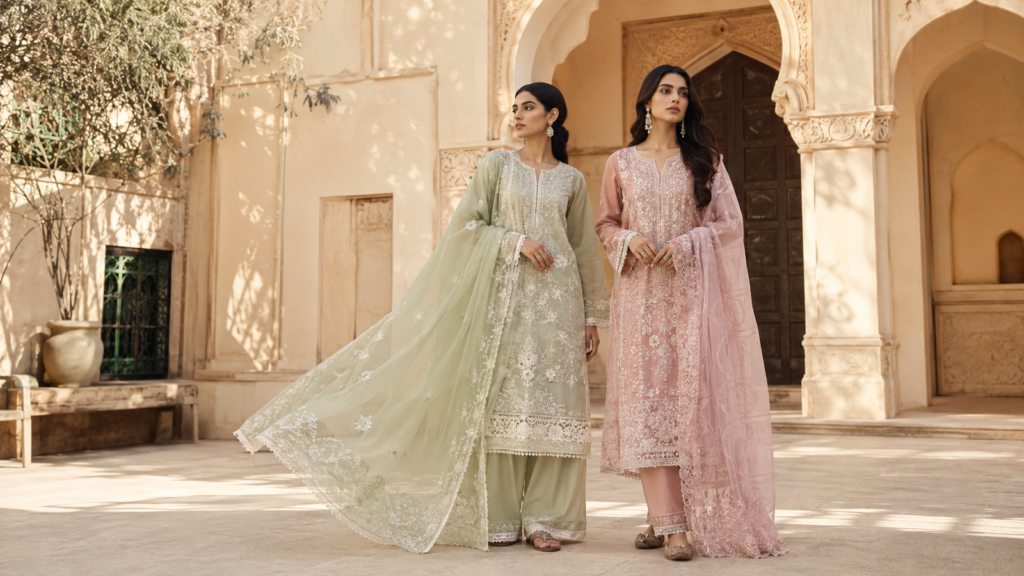
Featured image: Feyorawears editorial illustration.