
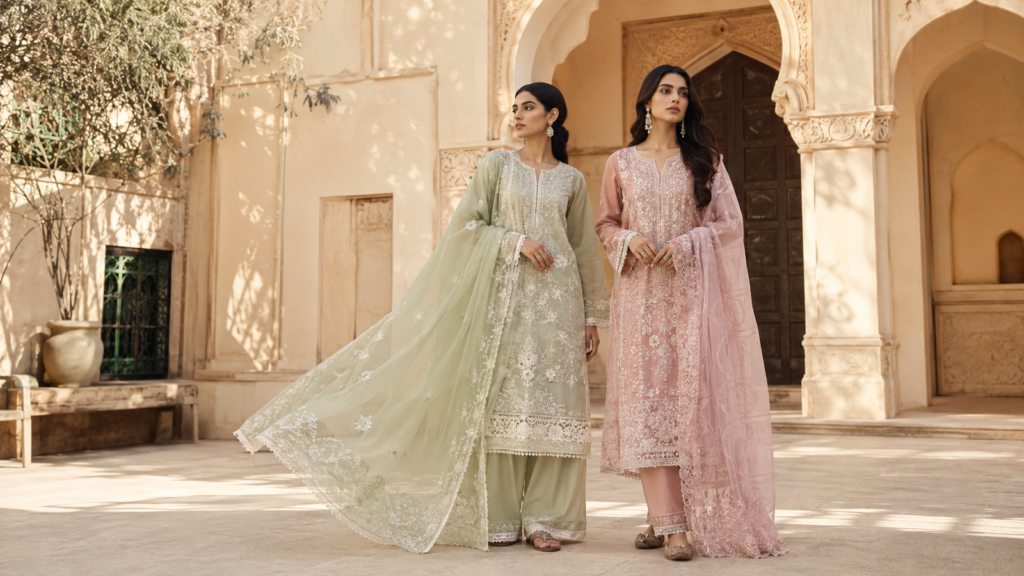
A neckline reference photograph can communicate a general shape while leaving important details unresolved. Depth, width, fastening and the way the opening sits during movement all affect the result. Write these decisions down before construction. The aim is not to turn you into a pattern maker, but to give the tailor a clear description of the appearance and access you prefer in the finished shirt.
Start with a neckline you know
Choose a garment whose neckline feels right and explain what you like about it. You may appreciate the depth but want a different shape, or like the opening while preferring another fastening. Separate those features instead of requesting an exact copy without considering the new design.
Wear the reference with any layer you expect beneath the new shirt. If a slip or lining edge matters to the appearance, include it from the start. This helps the discussion reflect the complete outfit rather than the outer garment alone.
Agree on measurement points
Ask how the neckline depth and width will be recorded. Write the starting points beside the figures and keep them with a sketch or reference photograph. A number without a measurement method can be misunderstood when discussed later.
For a ready-made purchase, ask for the relevant dimensions if the picture does not answer your coverage question. Do not assume a neckline shown on a model will sit identically on you or with your preferred underlayer.
Discuss how the garment is put on
A neckline’s appearance and its opening arrangement are related but separate decisions. Ask which fastening options are practical for the actual design and fabric. Consider whether you prefer buttons, loops, another closure or a construction without a separate fastening where feasible.
If possible, try a comparable opening and explain any difficulty. The tailor should assess the required construction rather than relying on a vague request to make it easy. Confirm whether a proposed change alters the visible front, back or side of the garment.
Review the neckline during movement
At the fitting, stand naturally, sit and reach forwards within your ordinary range. Observe whether the neckline stays where you prefer and whether the intended layer remains covered. Avoid holding the shirt in place only to make the mirror view look right.
If decoration surrounds the opening, review its position before agreeing to a depth change. Use the border and patch planning guide to keep the decorative layout clear. The lining and slip discussion helps coordinate the layers.
Review the neckline with its fastening both open and closed if you intend to wear it in both arrangements.
Browse unstitched clothing with a neckline note that includes shape, dimensions, access and coverage. Those details make a reference image much more useful and give you a clear basis for reviewing the garment at the fitting.
Continue exploring Tailoring & Fit or browse the Feyorawears Style Journal.
Featured image: Feyorawears editorial illustration.