
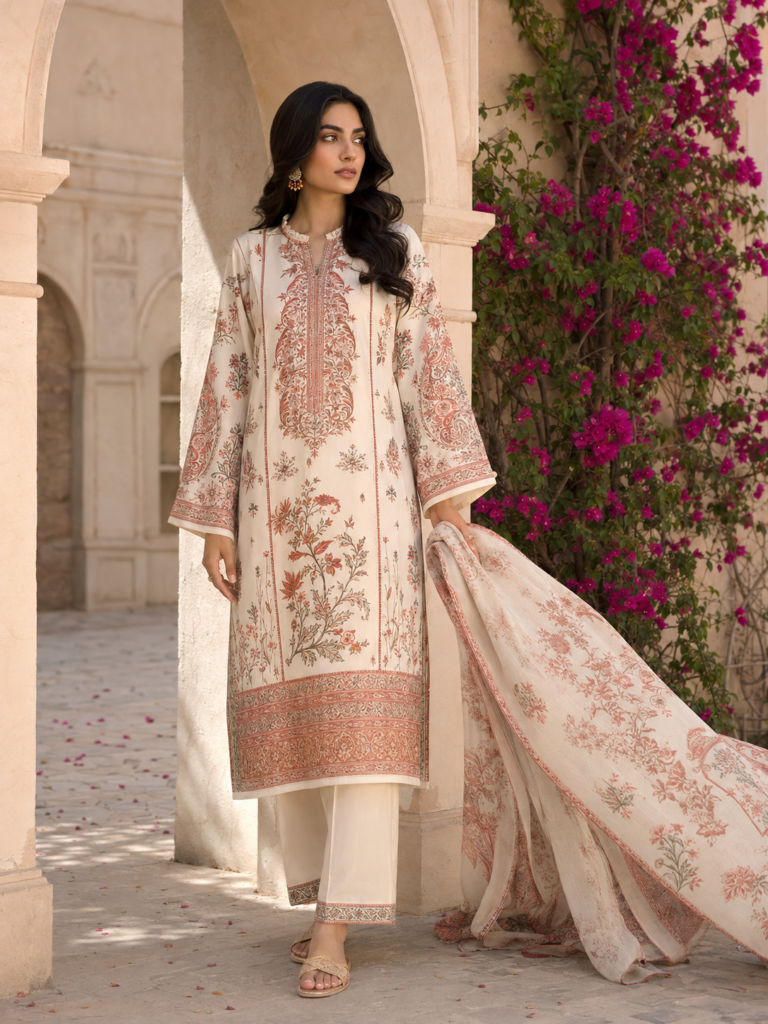
A fastening should work with the way you dress, not merely look attractive in a close-up. A loop may be difficult to reach, a decorative button may not open, or a zip may need more care than you expected. Establish what each closure does before deciding whether it suits you.
When you inspect clothing in person, handle it gently and follow any instructions. For an online purchase, ask for a short demonstration of the relevant closure on the actual garment.
Separate functional and decorative details
List the openings at the neckline, cuffs, side seam and waistband. Ask which buttons open and which are decorative. A row of visible buttons does not necessarily mean the shirt opens all the way down.
Check whether an opening is long enough for your usual dressing routine. If you prefer a garment you can put on without help, consider the fastening’s position as well as its appearance. This is a personal use requirement, not a quality judgement about a particular style.
Look at the attachment and surrounding fabric
View the button, loop or zip together with the area around it. Look for an unexplained detached section, a visible gap where fabric should meet, or a detail that needs clarification. Do not pull hard on a button or force a zip to test it.
For loops, ask whether they are intended to feel close around the button and how the seller recommends opening them. For a zip, a gentle demonstration can show where it begins, how far it opens and whether there is another fastening beside it.
- Can you reach the closure comfortably?
- Does it open, or is it part of the decoration?
- Is an additional hook or button included?
- Does the fastening sit against an area you find sensitive?
- Are replacement buttons supplied, or available separately?
Try a practical dressing sequence
Imagine a tunic with small buttons at the back of the neck. You like the front view but normally get ready alone. Ask where the opening sits and whether the garment can be put on while it remains closed. If not, consider whether you can manage those buttons comfortably.
Do not assume sizing up will solve an access problem. It may change the entire fit while leaving the fastening just as awkward. A different opening or a discussed alteration may address your actual need more directly.
Check a delivered item before changing it
If a closure is difficult, stop rather than forcing it. Take a photograph or brief video showing the issue and contact the seller. Preserve the garment’s condition while you establish whether there is a technique to using the closure or a problem needing resolution.
Replacing a button, removing a loop or changing a zip can affect more than appearance. Discuss the work with an appropriate repair professional and check the seller’s terms before arranging it.
Keep any spare pieces in a labelled envelope connected to the outfit’s record. A small fastening is easier to manage later when you know which garment it belongs to.
For the next step, read looking closely at lace and trims and describing a fit or use problem clearly.
Use the ready-to-wear collection to shortlist garments whose openings and details suit your everyday routine.
Continue exploring Quality & Buying or browse the Feyorawears Style Journal.
Featured image: Feyorawears editorial illustration.