
Before a delivered suit goes to the tailor or laundry, compare it with what you ordered. This is the point at which it is easiest to record the condition received and identify a missing component or specification question. Keep the packaging and labels while you complete the check.
Inspect calmly on a clean surface. The aim is a factual comparison, not a stress test of the fabric or a search for a reason to reject the outfit.
Match the parcel to the order
Check the order reference, item code, colour description and selected size where supplied. Open and count the components without removing labels unnecessarily. For a multi-item order, separate each outfit so a dupatta or trim does not become attached to the wrong set in your notes.
Compare the packing contents with the written listing. A piece shown in a campaign image should only be expected as part of the purchase if the specification included it.
Check finished and unstitched items differently
For ready-to-wear, inspect the shirt, trousers and any separate layer. Look at closures, seams and visible decoration without forcing fastenings or pulling loose threads. Compare important measurements using the method the seller stated.
For unstitched fabric, identify the front, back, sleeves, trouser piece and separate borders or patches. Keep their labels together. Record dimensions only where you can do so without stretching, cutting or disrupting the material.
If you cannot identify a panel, photograph it beside the rest of the set and ask. Guessing can turn a simple clarification into an irreversible cutting error.
Use a receiving checklist
- Confirm the item reference and selected options.
- Count the listed components and separate accessories.
- Photograph the whole set in the condition received.
- Inspect any area that appears different from the specification.
- Compare the key dimensions and note the measuring method.
- Read the supplied care information before treatment.
A photograph of the complete set is useful because a close-up alone may not show which component is affected.
Describe differences without diagnosing their cause
Suppose you ordered a shirt, trousers and dupatta, but find only two labelled pieces. Write: “The parcel contains the shirt and trousers; I cannot locate the listed dupatta.” Include the order reference and a photograph of the contents.
If you notice a mark, describe its location and appearance rather than guessing how it happened. If a measurement differs, show where the tape begins and ends and state the units. Give the seller information they can compare with their record.
Pause before making changes
Do not wash, cut, repair or alter an item while an unresolved concern is being discussed. Consult the current terms for that purchase and ask the seller how to proceed. Avoid trying a treatment merely to see whether a mark disappears.
Once the item is checked and any questions are resolved, give the tailor the confirmed component list and your design brief. That separates receiving the order from making the outfit.
For the next step, read keeping the order specification and preparing a tailoring brief.
Use the written contents of your chosen unstitched collection item as the receiving checklist.
Continue exploring Quality & Buying or browse the Feyorawears Style Journal.
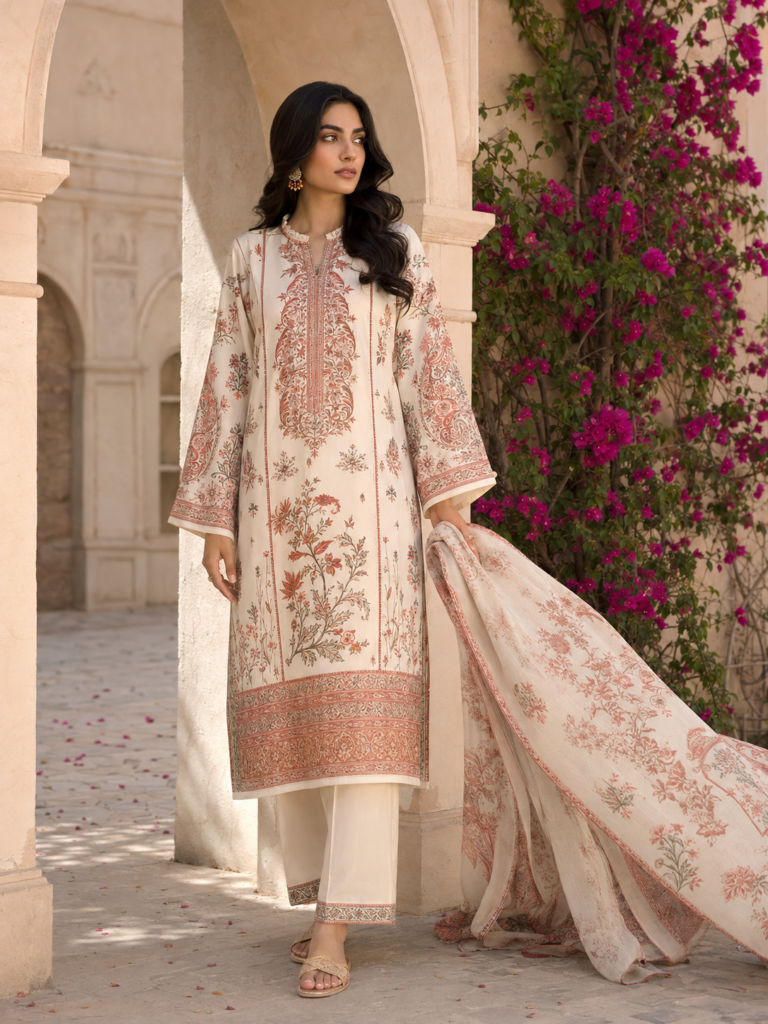
Featured image: Feyorawears editorial illustration.