
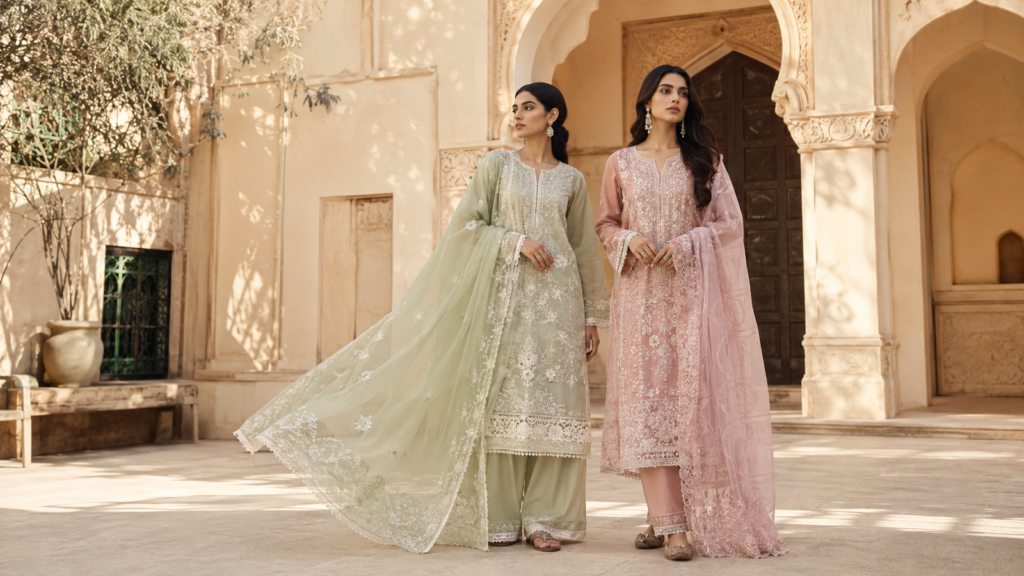
A capsule wardrobe is a selection of clothes you can combine easily for your usual life. For Pakistani womenswear, that might mean kurtas, trousers and dupattas, alongside co-ords or occasion pieces. There is no required item count, and you do not need to replace everything with beige.
The useful question is whether the pieces work together often enough to make getting dressed simpler. Build from clothes you wear, then use a small plan to spot genuine gaps before shopping.
Begin with the week you actually have
Write down the situations you regularly dress for. Include work or study, time at home, errands, visits and any events already in your calendar. A wardrobe for a mostly casual week will look different from one built around a formal workplace.
Next, note the practical needs of those days. You may want sleeves that stay out of the way, trousers that feel comfortable while seated, an extra layer, or a dupatta that is easy to manage. Make those requirements more important than copying someone else’s item list.
Sort by usefulness, without rushing to discard
Pull out the pieces you wore recently and enjoyed wearing. Make a second group for items that need a small repair, care or a different combination. Set aside pieces that do not fit your current routine, but give yourself time before deciding what to do with them.
Try complete outfits rather than judging every garment on its own. A kurta you rarely wear may become useful with trousers you already own. Take a photograph when a combination works; it is easier to remember than a vague plan to style it later.
Choose a colour family that feels like you
Pick two or three colours you are happy repeating, then add one or two accents. These are starting points, not limits. A navy, cream and sage palette could include a rose dupatta. A wardrobe built around black and warm brown could include a patterned kurta that connects the two.
Use your existing prints as colour references. If several kurtas share a small cream detail, one suitable cream bottom may connect them. Check the actual pieces together in daylight because similar colour names do not guarantee a match.
Build a small outfit map
Instead of choosing an arbitrary number of garments, start with three tops, two bottoms and two dupattas from your wardrobe. You do not have to wear every possible combination. Test the following five and record the ones that feel right:
- Your most-worn kurta with your most comfortable everyday trousers.
- The same kurta with the second bottom and a different dupatta.
- A printed top with the quieter of the two bottoms.
- A plain top with the more colourful dupatta.
- Your preferred combination finished for a visit or lunch.
If only two combinations work, identify why. The colours may compete, the lengths may feel awkward together, or one garment may not meet your coverage preferences. That tells you more than buying another complete set without a plan.
Add flexibility where you need it
A co-ord can be an easy complete outfit, and its pieces may also work separately. Try the top with an existing bottom before counting it as a versatile purchase. If you prefer having outfits stitched, plan the finished shape and measurements so the new pieces can work with your existing clothes.
Browse ready-to-wear outfits for combinations you could wear as listed, or explore unstitched options if tailoring suits your plans. Check each product’s included pieces rather than assuming every photographed item is supplied.
Use a pause-before-buying checklist
- Can I name two outfits this piece would help create?
- Does it meet a need in my actual week?
- Have I checked measurements, included pieces and care information?
- Will I still want it if I cannot buy matching accessories?
- Am I replacing a useful worn item or repeating something I already overlook?
Keep occasion clothing separate from the everyday plan if that makes the wardrobe easier to use. Review your outfit photos as your routine changes, then adjust gradually. For a closer look at choosing complete sets, read two-piece versus three-piece suits.