
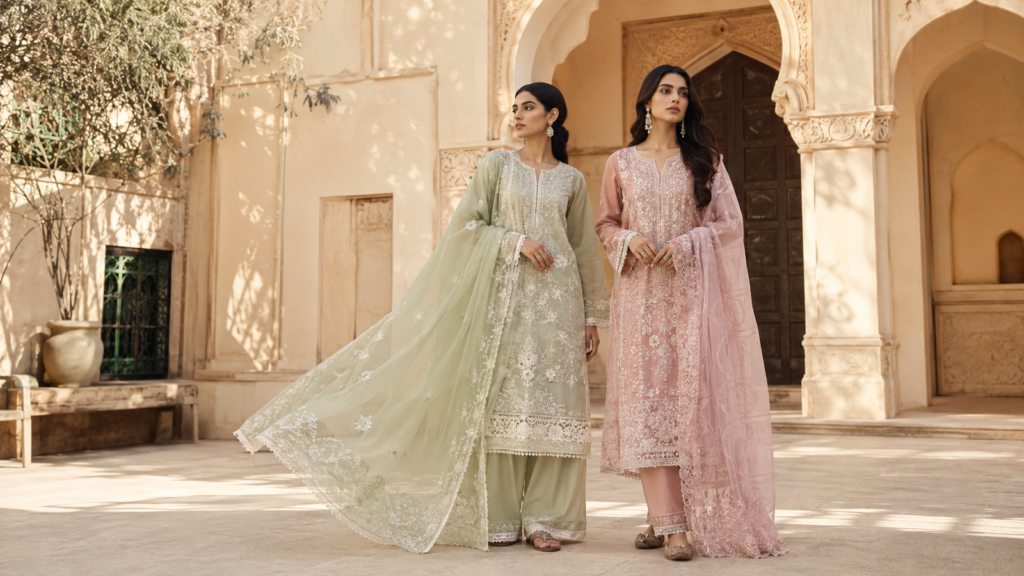
A suit becomes more useful when its bottom half matches the way you want to wear the whole outfit. Shalwar and straight trousers can each create different combinations, but the names do not describe every variation within them. Compare the actual shapes, waistband details and lengths you are considering. Then assess them with the kameez, footwear and activities that belong to your own routine.
Start with the shirt you intend to wear
Identify the shirt length, hem shape and side openings. Note any border that you want to remain visible. A bottom chosen in isolation may create a different balance once much of it is covered by a long shirt or revealed beneath a shorter kurta.
Try a familiar pair with the reference shirt and photograph the front and side views if helpful. Describe what you want to change in the next outfit: more visible shape, a quieter outline or a different relationship with the shoes.
Compare the actual bottom shapes
Look at the candidate’s outline around the hip, thigh and lower leg. Ask for a clear view if the product photograph conceals those areas. For tailoring, show the specific version you mean rather than expecting the word shalwar or straight to communicate every proportion.
The tailor should assess the requested shape against your measurements and the supplied material. If you want to change the bottom shown in an unstitched set’s styling image, ask whether the available quantity and width support the new plan.
Work through a two-outfit trial
Imagine a long plain kameez with a decorated dupatta. One bottom option gives the lower outfit a more noticeable shape; another leaves a simpler visible section below the hem. Keep the shirt, dupatta and shoes the same while comparing them.
Decide which version you would choose for an ordinary day, not only for a photograph. If both appeal, note the occasions for each instead of inventing a universal rule about which option is more formal or more flattering.
Include fit and access in the decision
- Confirm where you want the waistband to sit.
- Compare seated comfort and normal movement.
- Check the hem relationship with your intended shoes.
- Discuss pockets and fastenings before construction.
- Review supplied quantities before changing the proposed shape.
Our waistband comparison helps with the top of the garment. For a longer shirt, the kameez-and-trouser hem guide focuses on the portion of the bottom that remains visible.
Save a full outfit reference for each option so the comparison remains about the combination rather than isolated product pictures.
Explore unstitched sets with the bottom shape already part of your brief. Choosing it deliberately can turn a coordinated purchase into an outfit that suits your everyday preferences, rather than leaving the decision to whatever happened to be shown in the main image.
Continue exploring Tailoring & Fit or browse the Feyorawears Style Journal.
Featured image: Feyorawears editorial illustration.