
A family celebration can bring several clothing needs into one conversation. One person may need a complete outfit, another an alteration and another only a suitable pair of trousers. A shared spending plan works best when those differences are visible without ranking whose preferences matter most.
Agree who is contributing and what the budget is intended to cover. Keep sensitive personal information and individual fit choices private unless the person wants to share them.
Separate shared costs from individual choices
Some expenses may be shared, such as transport to a fitting appointment. Most clothing choices remain personal. Put these on different lines so a shared total does not hide how it is being used.
Ask each person to identify what they already have and the specific gap for the event. Do not assume everyone needs a new outfit because one family member does.
Set priorities before discussing decorative extras
Agree on the practical requirements: complete clothing, usable fit, appropriate preparation and readiness before the event. Then list optional additions such as another accessory or a second styling version.
A person needing a more involved alteration may have a higher preparation cost even when they are buying less clothing. Compare the need and agreed scope rather than the number of shopping bags.
Use a simple family example
Imagine three relatives planning for a wedding. The first has a suitable suit that needs sleeve work. The second needs a new outfit. The third wants to repeat a favourite set with a different dupatta.
Create one line for each actual plan, including confirmed alteration quotes and required components. Add a separate shared-transport line if relevant. The sheet now describes three different solutions rather than assigning everyone the same outfit allowance by default.
If equal contributions or spending limits matter to the family, discuss that explicitly. The plan should reflect the agreement rather than silently assuming one definition of fairness.
Coordinate without controlling
A broad colour relationship can help a family photograph feel considered, but exact matching is optional. Let each person choose a cut, coverage level and degree of decoration they are comfortable wearing.
- Agree any shared visual preference in plain language.
- Confirm individual needs and available pieces.
- Record who will approve each purchase or alteration.
- Keep optional extras separate from required work.
- Set a date to review unresolved costs.
No one should discover that a group colour plan has committed them to a garment or expense they did not choose.
Keep changes visible
If a planned item becomes unavailable or a quote changes, update the relevant line and discuss the effect on the total. Avoid solving every change by reducing someone else’s allocation without their involvement.
Before the event, review readiness rather than reopening every aesthetic decision. Confirm that each person has the complete outfit, fitting work and necessary accessories. A useful shared plan reduces last-minute pressure while leaving room for different tastes and practical needs.
For the next step, read coordinating family outfits without exact matching and organising an occasionwear budget.
Use the luxury pret collection for an individually agreed clothing need within the wider family plan.
Continue exploring Wardrobe Planning or browse the Feyorawears Style Journal.
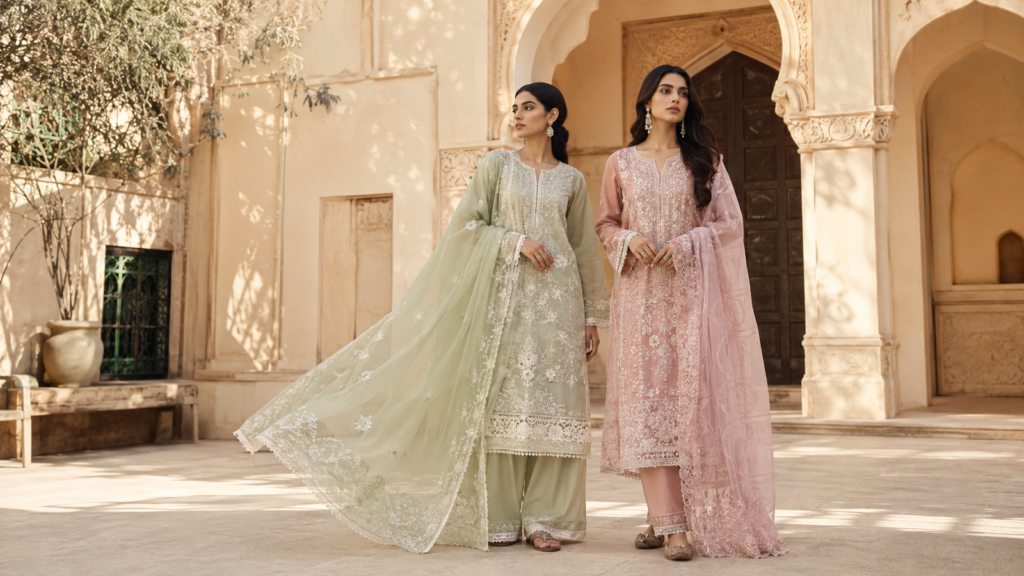
Featured image: Feyorawears editorial illustration.