
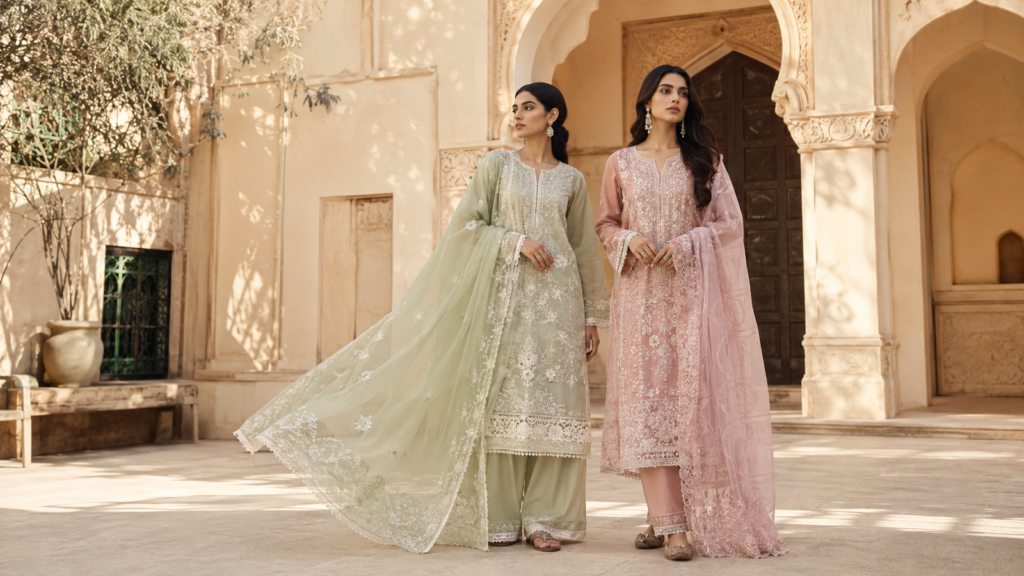
Side openings can change how a kameez looks and feels during ordinary movement, yet they are easy to overlook while choosing a neckline or hem. Give their position a separate place in your tailoring brief. The right decision is the one that matches your coverage preferences and the actual outfit, rather than a slit height selected only because it appears in a reference photograph.
Examine a shirt you already use
Wear a familiar kameez with the trousers you intend to pair with the new one. Look at the side view with your arms relaxed. Then sit down, walk and reach forwards normally. Notice what you like about the opening and what you would prefer to change.
Record the observation in practical terms. You may want less visible trouser at the side while keeping the same front length, or a different arrangement around a border. Those concerns should not automatically become a request to lengthen the whole shirt.
Define the measurement reference
Ask the tailor how the opening position will be recorded. A measurement taken from the hem is not the same description as one taken from the shoulder or another point. Write the method beside the number so the instruction remains understandable later.
For a ready-made purchase, request the relevant measurement or a clear side view if the listing does not show it. Do not assume that two shirts of the same overall length have identical side openings.
Consider the hem and decoration together
A fixed border, shaped hem or different front and back lengths may affect the opening’s appearance. Show the tailor which detail you want preserved and ask how the side treatment will meet it. Review the proposed result before the edges are finished.
Imagine a long shirt with a prominent border at the front. You might want the side view to show that border cleanly while maintaining your preferred coverage. An annotated photograph of a reference garment can explain the visual aim more clearly than the word modest alone.
Check the decision during the fitting
- Wear the intended trouser style and relevant layers.
- View both sides without pulling the shirt into place.
- Sit and stand to observe the arrangement in use.
- Confirm the agreed opening position and measurement method.
- Ask about the effect of any later length change.
Use the long-kameez proportion guide to connect side openings with the visible trouser section. The seated comfort checklist helps assess the outfit beyond a standing mirror view.
Confirm whether both side openings should match or whether the design intentionally treats them differently.
Browse unstitched clothing with side coverage included in the initial plan. A carefully recorded opening position gives the tailor a specific preference to work with and prevents an important part of the finished shirt from becoming an afterthought.
Continue exploring Tailoring & Fit or browse the Feyorawears Style Journal.
Featured image: Feyorawears editorial illustration.