
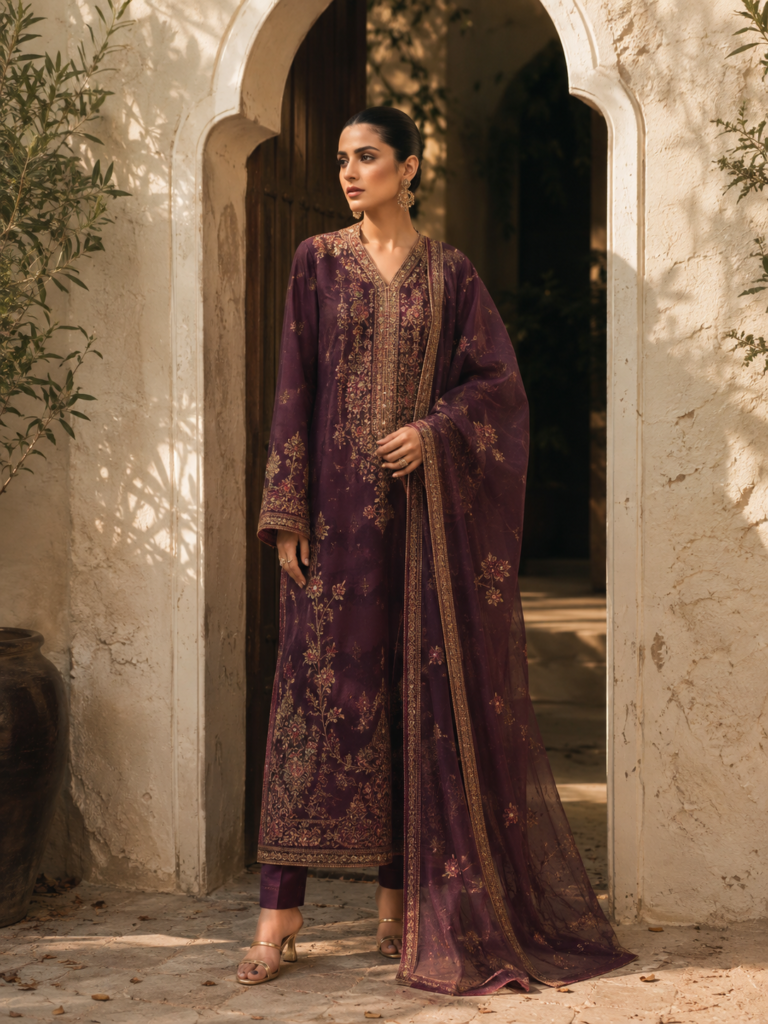
A heavily embellished outfit can spend more time between occasions than in use. A little organisation before it is put away can make the next preparation much easier, especially when the set includes separate layers or removable details.
Treat storage as a sequence: inspect, resolve care or repair questions, identify the components and choose an arrangement appropriate to the garment. Do not begin by forcing the complete set into whatever space is left.
Record the condition after the occasion
Look at the outfit in good light and note any area needing attention. Check closures and decoration without pulling threads or attempting an uncertain repair. Photograph a concern in context and then close up so you can locate it again.
If cleaning may be needed, consult the supplied instructions and arrange suitable advice. A storage guide cannot decide the correct treatment from the word “embellished” or from a fabric name alone.
Count the components before separating them
Lay out the shirt, trousers, dupatta, inner layer and any detachable pieces. Record which accessories belong to the outfit and which are simply jewellery or a bag you paired with it. That distinction prevents styling choices from becoming confused with garment components.
Keep removable items labelled. Do not detach anything that is not designed to be removed merely to make packing easier.
Ask a precise storage question
Tell the maker or seller which part of the garment carries substantial decoration and what storage space you have. Ask how its weight should be supported, whether any sections should avoid folding and whether components should be kept separately.
A useful enquiry might say: “The lower half of the shirt is heavily decorated and the outfit includes a separate inner. What arrangement do you recommend between wears, and should any area be kept free from pressure?”
This gives more context than asking whether all formal clothes should hang or fold.
Make a storage map
Once the instructions are clear, note where each component will be kept. For example: outer garment in its agreed location; inner layer beside it; detachable detail in a labelled pouch. Save a photograph of the arrangement if it will help you repeat it.
Keep enough access to retrieve pieces deliberately. Avoid a setup that requires pulling a decorated edge to release the garment from a crowded stack.
- Resolve outstanding condition questions before putting the outfit away.
- Follow the specific handling and storage guidance supplied.
- Label separate components with the same outfit name.
- Keep the care record accessible.
- Set a reminder to inspect before the next known event.
Revisit the outfit before the next deadline
Retrieve it early enough to check that every piece is present and that any previously noted work was completed. Try the combination with its intended layers and shoes rather than assuming an earlier fit still matches your preference.
Good organisation does not guarantee a garment’s future condition. It gives you a clear record, reduces unnecessary searching and leaves time to address a question before the evening you want to wear it.
For the next step, read choosing hanging or folding from construction and checking clothing after care.
Ask about handling and storage alongside the item details when browsing the luxury pret collection.
Continue exploring Care & Storage or browse the Feyorawears Style Journal.
Featured image: Feyorawears editorial illustration.