
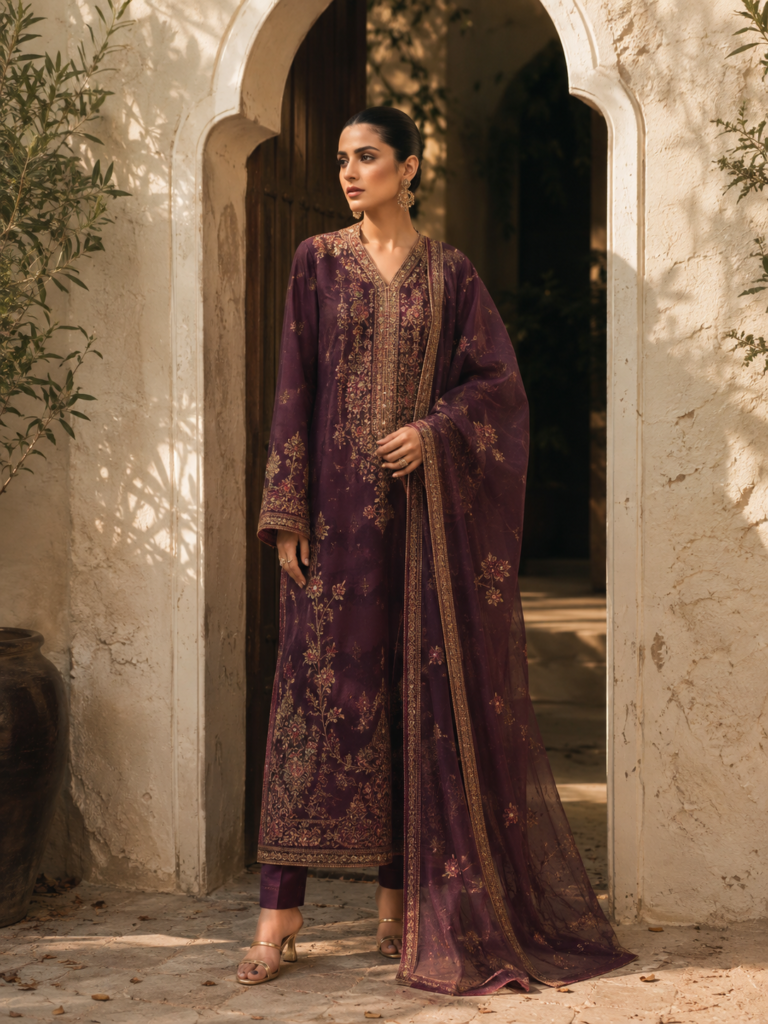
A spare button, removable belt or detached decorative piece is easy to lose when every small item goes into one drawer. Give each piece an identifiable home connected to the garment it belongs to.
Start by separating garment components from optional styling accessories. A removable collar supplied with a shirt is part of its record; earrings you happened to wear with it belong in a different category.
Identify before storing
Lay the items on a clean surface and connect each to its outfit. Photograph them together if their relationship is not obvious. For an unstitched set, keep loose trims and patches with the component list until the tailor has confirmed their intended use.
Do not remove an attached detail unless it is designed to come off. If you cannot tell whether a fastening is detachable, ask before pulling or cutting anything.
Use labels that survive a change of plans
Name the garment, item code if useful, and the part’s role. “Plum shirt, spare neckline button” is more useful than “wedding things.” An occasion name may become meaningless after the outfit is worn elsewhere.
Keep any seller note about attachment or care beside the piece. Avoid sticking a label directly to delicate fabric or decoration; label its storage location instead.
Create a small component register
Record what is present and what is being used. This is particularly helpful when a tailor, cleaner or family member temporarily has part of the set. Note who holds it and when it is expected back.
For example, an outfit may have a detachable belt, two spare buttons and a separate inner layer. If the belt goes with the shirt for an adjustment, update the note. The remaining pouch should not imply that the complete outfit is still at home.
Choose separation for practical reasons
Keep sharp or catching elements from resting loosely against garments. Store pieces in a way that follows their material and construction guidance, without compressing them simply to fit a smaller space. If a decorative component has unclear handling instructions, ask the maker.
- Give each outfit’s supplied pieces a clear identifier.
- Keep spare closures distinct from decorative trims.
- Record any piece handed to another person.
- Retain instructions for attachment and removal.
- Check the inventory before the next fitting or event.
Optional jewellery can be organised by your own system, with a photograph in the outfit note showing the pairing. It does not need to be physically stored against the garment to remain associated with it.
Reassemble deliberately
Before an occasion, gather the components and compare them with the register. Attach removable details according to the supplied instructions and check the result before getting ready under time pressure.
If something is missing, identify exactly which part rather than searching every accessory drawer. A clear inventory can also help you ask whether a replacement is available without sending a vague request for “the matching piece.” The system should make small details easier to find, not create a complicated catalogue you cannot maintain.
For the next step, read organising dupattas by complete outfits and recording components for a cleaner.
Keep any separate components supplied with a women’s essentials collection purchase identified from the day they arrive.
Continue exploring Care & Storage or browse the Feyorawears Style Journal.
Featured image: Feyorawears editorial illustration.