
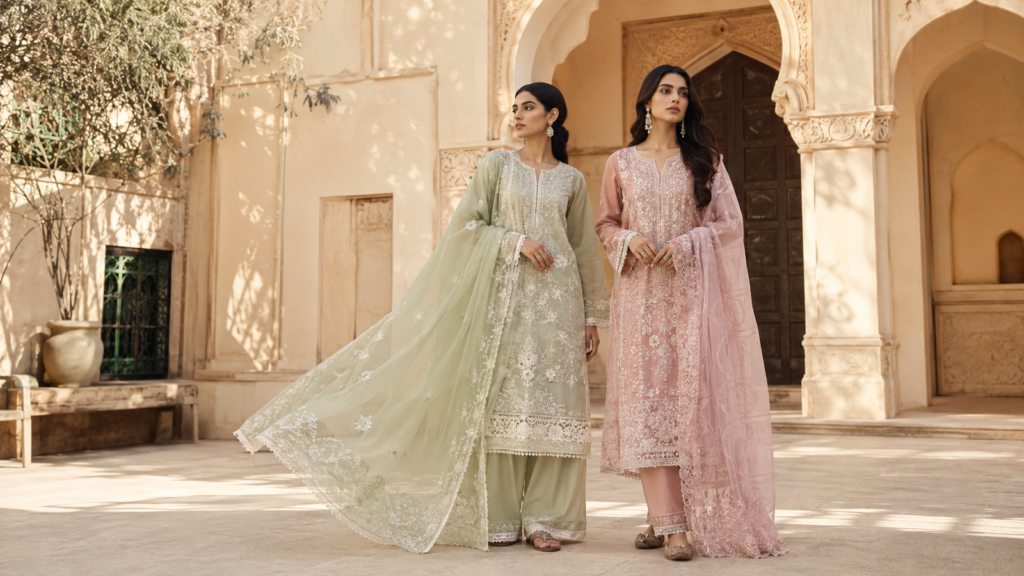
An embroidered shirt does not have to stay attached to its most formal combination. Try it with quieter pieces from your wardrobe and see whether it suits a lunch, visit or ordinary day you would like to dress for. Let the actual garment decide what is practical.
Identify the shirt’s busiest area
Look at where the embroidery sits: neckline, sleeves, hem or across the front. That location gives you a useful styling direction. A decorated neckline may need little jewellery, while a hem detail may work best when the trousers leave its outline clear.
Check the inside and the way the shirt feels while worn. If the decoration presses or catches during normal movement, changing the trousers will not make it an easy everyday piece. Our guide to embroidery backing and placement covers questions to ask before buying.
Choose a quiet bottom first
Try a plain trouser in the shirt’s main colour or one of its thread colours. A blue embroidered shirt with navy trousers can create a close relationship. A cream bottom may give more contrast. Compare the full outfit rather than deciding from colour names.
Use a trouser shape you already find comfortable. Check the hems with your usual shoes. The purpose is to make the shirt easier to wear, so avoid a combination that needs unfamiliar footwear or constant waistband adjustment.
Decide whether a dupatta helps
If you wear one, a plain dupatta can give the shirt room to show its detail. You might repeat the shirt colour or pick a quieter colour from the embroidery. Try the drape without covering the area you most want to keep visible.
If your preferred coverage naturally covers that detail, let another part of the outfit become the focus. The styling should support your comfort, not require you to keep moving the fabric away from the shirt.
Use familiar accessories
Start with shoes and a bag you already use for the planned day. Add jewellery only where it improves the combination for you. Small earrings may be enough beside a detailed neckline, while a watch can work with simpler cuffs.
For errands or work, check the outfit with the filled bag and the movements you expect. A shirt can look quieter with plain trousers yet still have cuffs that make a particular task awkward. Choose the day as carefully as the supporting pieces.
Record a wearable combination
- Take a photo once the outfit feels complete.
- Note which trousers and shoes worked.
- Record any activity that made the detail inconvenient.
- Keep the more formal original combination as another option.
Explore ready-to-wear pieces with everyday use in mind. For another way to expand existing clothes, read styling a co-ord as separates.
Continue exploring Everyday Style or browse the Feyorawears Style Journal.
Featured image: Feyorawears editorial illustration.