
Cotton-linen and viscose-linen descriptions tell you which names a seller associates with a fabric, but they may not tell you the proportions. Before comparing outfits, check whether you have complete composition information or only a shortened material label. The distinction matters because a confident-sounding name should not become a promise about every aspect of the finished garment.
Put percentages beside the names
When a listing supplies proportions, record them as written and attach them to the relevant component. Gul Ahmed’s men’s shirt MN-CS-SS26-013 discloses 63% cotton, 25% viscose and 12% linen. It is a useful example of a specific statement, not a formula that can be assigned to another outfit using similar words.
When percentages are absent, ask whether a label image or supplier specification is available. Avoid inventing an equal split between two named fibres. Also check whether the listed mixture refers to the main fabric, lining or another part of a coordinated set.
Compare like garments where possible
A loose shirt and a close-fitting trouser are different products even if their material labels share a word. Keep the intended cut, dimensions and use in view. Otherwise, you may attribute a preference for one silhouette to its composition without having comparable evidence.
If you are considering two unstitched sets, explain the same proposed shape to your tailor for both. Ask about the supplied panel layout and finishing requirements. Keep those practical observations separate from claims that would require material testing.
Use a decision example
Suppose option A provides a documented blend and clear measurements. Option B has your preferred print but only a viscose-linen label. Your next step is not automatically to reject B or assume it is identical. Ask B’s seller for the missing information and compare the answers against the requirements that matter to you.
You may still choose the preferred print after receiving adequate detail. Or the unanswered specification may be important enough to pause. Both are clearer decisions than filling the gap with a claim about softness, warmth or resistance to creasing.
Keep the final comparison short
- Documented composition for each relevant piece.
- Supplied quantities or finished dimensions.
- The cut and layers you intend to wear.
- Item-specific care information.
- Any unresolved difference that could change your choice.
Review reading a linen or linen-blend label for the distinction between a title and a specification. Use the component record when a suit includes several named fabrics.
When keeping label photographs, name each file with the product reference and component. That small habit makes a later comparison or care enquiry much clearer.
Explore unstitched outfits after the information has been organised. A useful comparison describes two actual purchases and your priorities, rather than assigning universal qualities to a pair of material names.
Continue exploring Dhanak & Winter Fabrics or browse the Feyorawears Style Journal.
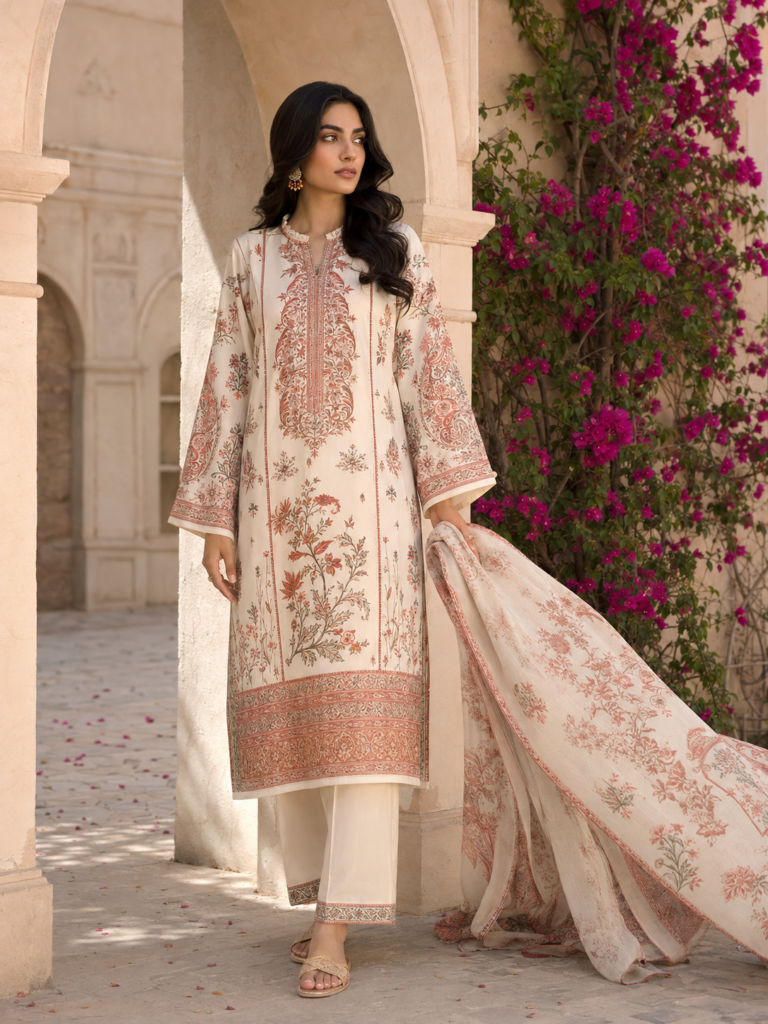
Featured image: Feyorawears editorial illustration.