
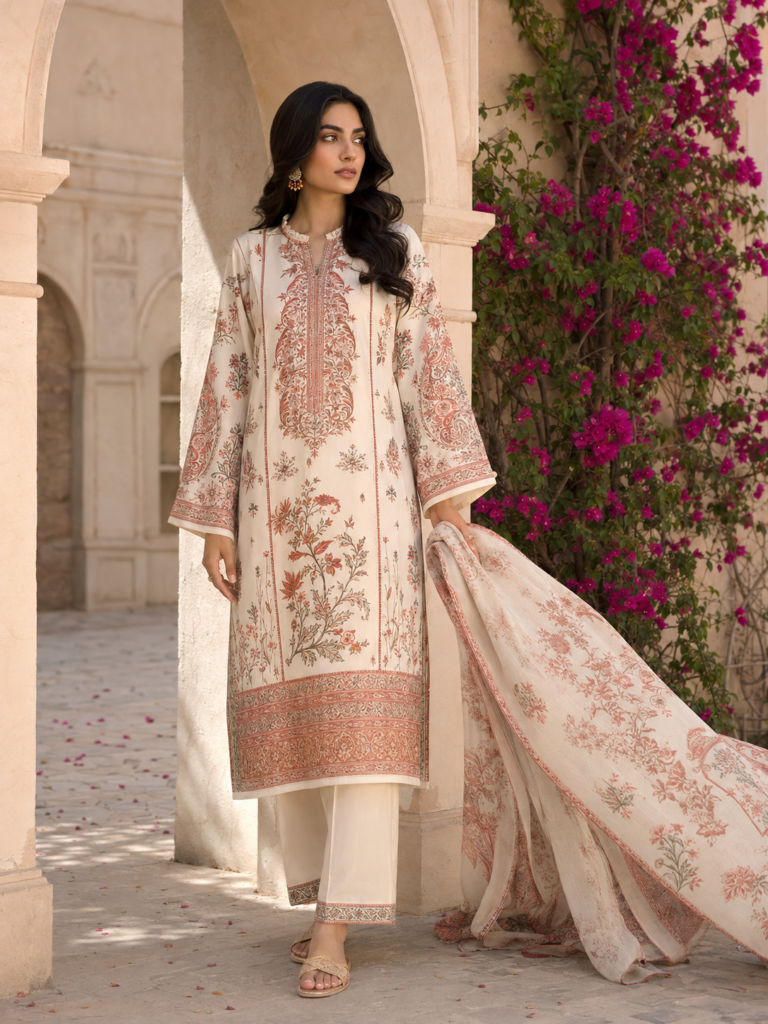
Choosing a Dhanak Suit for an Indoor Winter Gathering
Choose a Dhanak-labelled suit for an indoor winter gathering by planning the venue, removable layers and seated outfit, without relying on seasonal wording.
Make sense of winter fabric labels and compare the components, composition and finish of individual suits.
Choose a Dhanak-labelled suit for an indoor winter gathering by planning the venue, removable layers and seated outfit, without relying on seasonal wording.
Take clear Dhanak fabric length questions to your tailor, including width, panel layout and decorative pieces, before assuming a supplied cut will fit your design.
Read a winter suit label component by component, separating shirt, trouser, shawl and lining information so a material line does not hide important differences.
Compare cotton-linen and viscose-linen outfits using the disclosed percentages, component details and intended cut, instead of predicting performance from two names.
Build a khaddar-labelled outfit with a different-fabric dupatta by connecting colour and detail, recording each component’s dimensions and material information.
Assess a karandi-labelled suit through the actual texture, proposed cut and coverage you prefer, while asking for documented composition and component details.
Use close-up photographs of slub-labelled fabric to inspect visible texture and pattern placement, while keeping fibre identity and performance claims separate.
Read linen 7272 as an unexplained listing code until the supplier clarifies it, then check the actual composition, dimensions and finish of the suit.
Choose embroidered Dhanak-labelled daywear by mapping detail against your routine, then checking cuffs, neckline and the finishing you will actually notice.
Plan printed Dhanak-labelled outfits for a working week by mapping repeat combinations, checking print placement and choosing additions that fill a real gap.