
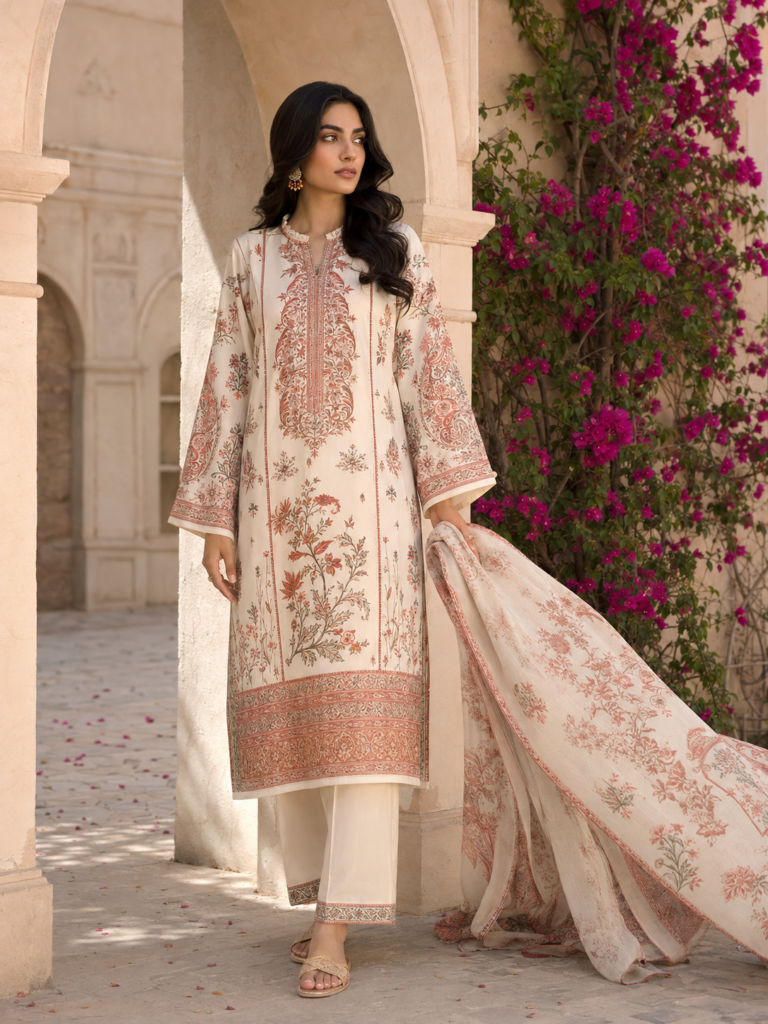
Embroidered daywear earns its place when the detail works with the way you spend the day. A striking front panel may appeal in a photograph, but your cuffs, neckline and side profile are also part of the outfit people see while you move and sit. For a Dhanak-labelled suit, assess the actual decoration and garment plan separately from any assumptions about the fabric name.
Map detail against your activities
Write down three ordinary activities for the outfit: desk work, a daytime visit and travelling between places, for example. Beside each, note which parts of your clothes you handle or cover. Your sleeves may sit beside a keyboard, a handbag may cross one shoulder, and a dupatta may hide part of the neckline.
This is not a reason to avoid embroidery. It is a way to decide where you want it. You might prefer a visible neckline and quieter cuffs, or keep the shirt front simple while giving the hem more attention.
Inspect placement before judging quantity
Request a full front view and close-ups of the decorated zones. Ask whether the embroidery is already on the fabric or supplied as separate patches. For an unstitched purchase, identify which parts have fixed placement and which require a tailor’s decision.
An outfit with less visible decoration may suit your plan better than one with more. Count the details you would actually show rather than treating the amount of embroidery as the only measure of value. The finished result depends on the arrangement you choose.
Try a working-day example
Imagine a shirt with embroidered cuffs and a decorated neckline. You usually wear a watch and a folded dupatta over the same wrist and shoulder. Lay those accessories beside the proposed decoration and consider whether everything occupies the same small area.
You could simplify the jewellery, alter the dupatta arrangement or choose a design with detail elsewhere. Make one change at a time so you can see its effect. There is no need to redesign the entire outfit when one adjustment answers the concern.
Include finishing in the conversation
Ask for clear views of attachment points, edges and the reverse where practical. If something appears irregular, request clarification instead of concluding that all pieces in the fabric category share that feature. Confirm any remaining finishing work and the care information for the actual item.
Use the border-planning guide before allocating loose decorative pieces. For cuff dimensions and movement, the daily sleeve-opening check gives a focused reference.
Before ordering, write a brief such as visible neckline detail, quiet wrist area, and a hem that works with my usual trousers. Browse unstitched clothing for that specific balance. The most useful embroidery is not necessarily the most extensive; it is the detail you choose deliberately and enjoy seeing during an ordinary day.
Continue exploring Dhanak & Winter Fabrics or browse the Feyorawears Style Journal.
Featured image: Feyorawears editorial illustration.