
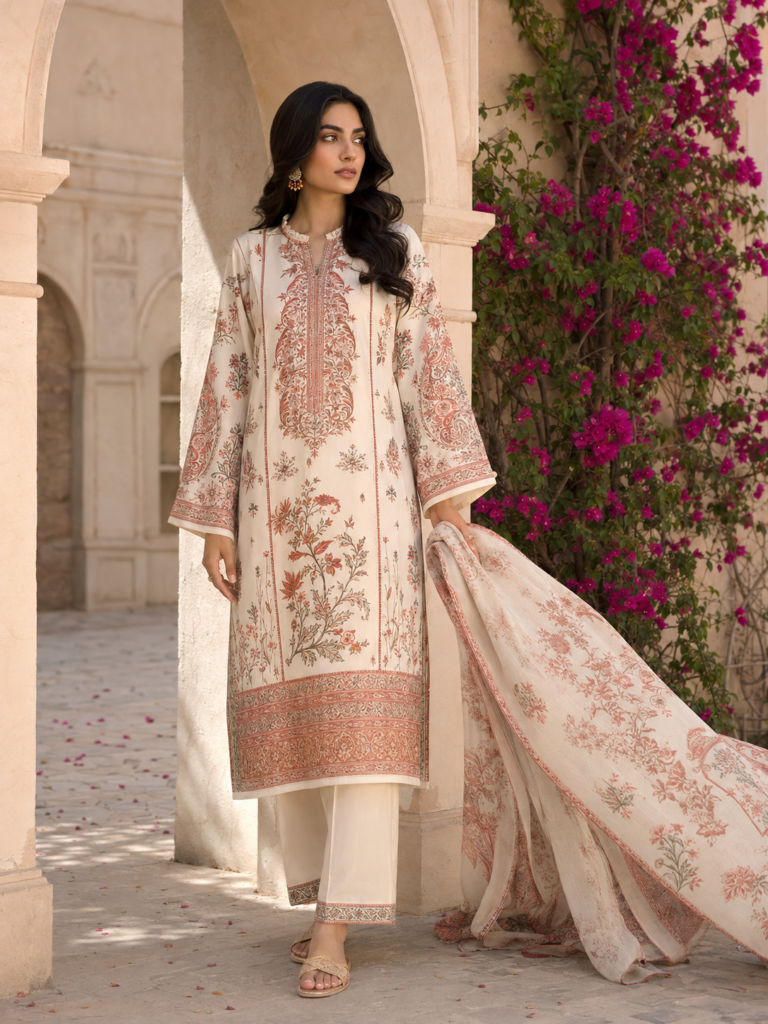
A khaddar-labelled shirt does not need a dupatta with an identical material name to form a considered outfit. The connection can come from colour, border detail, scale or the way the pieces are arranged. What matters is that you choose the combination deliberately and retain accurate information about each piece. A coordinated appearance should not be confused with a shared composition.
Decide what the dupatta should add
Look at the shirt without a dupatta first. Identify whether it needs a quiet frame, an accent colour or a more noticeable edge for the occasions you have planned. If the shirt already has several prominent details, consider which one you want to remain visible.
Then bring the trousers into the picture. A dupatta can connect with the shirt, the trousers or a small detail shared between them. There is no need to make every component equally patterned or equally decorated.
Compare the surfaces at a useful scale
View the shirt and candidate dupatta together, using physical pieces where possible. If shopping online, request photographs that show the whole piece as well as the relevant detail. A close-up can help you see an edge, but it cannot show the overall balance by itself.
Describe only what is observable until further evidence is available. You might note that one surface looks more prominent or that a border has a stronger outline. Do not treat those observations as proof of fibre content or a reliable forecast of long-term performance.
Try a restrained and a more detailed version
Imagine a plain khaddar-labelled shirt with a decorated neckline. One option is a simple dupatta that repeats a small neckline colour. Another is a contrasting bordered piece that becomes the outfit’s main feature. Keep the trousers and shoes the same while comparing the alternatives.
Decide which version fits your actual plans. If you choose the more detailed dupatta, you may want quieter jewellery. If you choose the simpler piece, the neckline can remain the visual focus. These are styling adjustments rather than rules attached to khaddar.
Record the separate specifications
Ask for the composition information, dimensions and care instructions for the dupatta itself. If it is sold as part of a set, confirm whether the component details differ. Keep the material record clear enough that you could explain the outfit accurately to a tailor or cleaner later.
Use the contrasting-texture checklist to refine the visual comparison. The piece-by-piece label guide helps organise the factual information without merging separate materials into one description.
If the dupatta comes from a different seller, save its reference separately so future questions reach the right source.
Browse women’s essentials for the role your existing shirt needs. A successful pairing can bring two distinct pieces together while allowing both their appearance and their documented specifications to remain clear.
Continue exploring Dhanak & Winter Fabrics or browse the Feyorawears Style Journal.
Featured image: Feyorawears editorial illustration.