
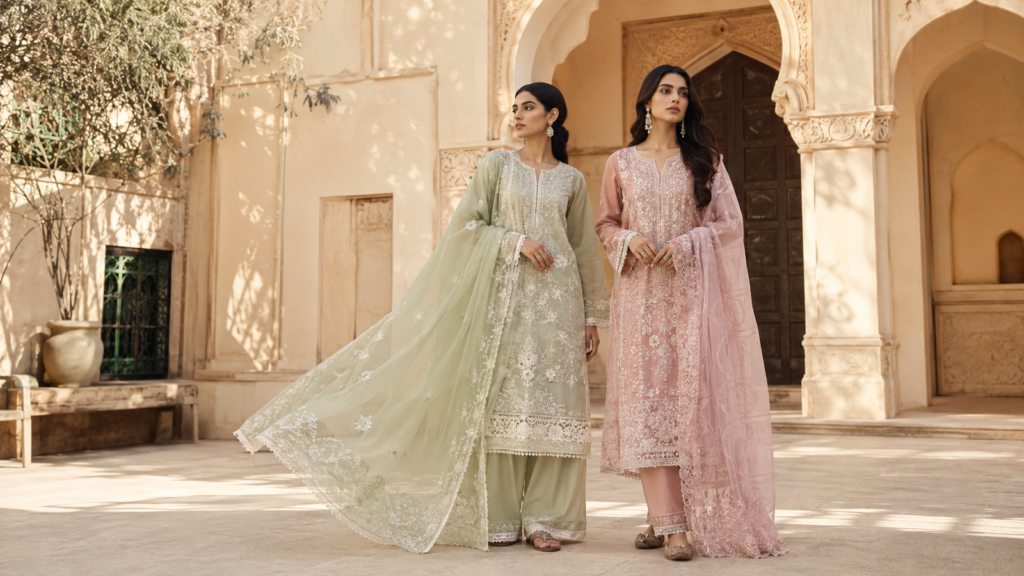
A long kameez and straight trousers may look straightforward, yet the small section of trouser visible beneath the shirt can strongly affect the finished combination. The shirt length, side openings, trouser position and footwear all contribute. Assess them together before asking for either hem to be finalised. This is a question of your preferred appearance and movement, not a single correct length for everyone.
Set up a complete reference outfit
Wear a long shirt and trousers you already own with the shoes intended for the new outfit. Notice how much trouser shows at the front and through the side openings. Take front and side reference photographs if they help you explain the preference.
Record what you want to preserve or change. You might prefer the current front length but want less trouser visible at the sides. That points to a discussion about openings and shape, not automatically a request to lengthen the entire shirt.
Decide which hem is the fixed point
If your shirt has a prominent border, you may want to plan the outfit around its position. If a trouser detail is central to the design, you may choose to keep that visible and adjust the shirt proposal instead. Identify the priority before making both lengths final.
For an unstitched purchase, ask the tailor whether the supplied components support the arrangement. If a fixed design limits the options, discuss the available compromises rather than requesting a change after the border has been cut or attached.
Compare standing and seated views
Sit on a chair and stand again in the reference outfit. Observe where the shirt settles and whether the trouser position remains comfortable for you. The visible relationship will naturally change with posture; decide whether you like the overall result rather than expecting it to remain a still photograph.
Also walk a short distance in your intended footwear. Check that the combination suits your usual stride and that you are not constantly holding or adjusting a hem. Describe any concern to the tailor with the garment on.
Write down the relationship, not only numbers
A useful brief might say: preserve the shirt border, retain a visible section of plain trouser at the front, and review the side opening during the fitting. Add the agreed measurements and their starting points so the wording can be translated into the actual garment.
Read planning around a fixed hem border if decoration anchors the shirt length. The side-slit guide helps separate side coverage from the main hem decision.
Save a full-length reference image that includes the shoes, rather than cropping away the relationship you want preserved.
Browse unstitched clothing with both pieces in mind. A considered long-shirt outfit comes from how the hems, openings and shoes work together, rather than treating the kameez and trousers as unrelated tailoring orders.
Continue exploring Tailoring & Fit or browse the Feyorawears Style Journal.
Featured image: Feyorawears editorial illustration.