
Sleeve measurements are easy to misread when two shirts use different shoulder designs. A number measured from one seam may not describe the same overall reach as an identical number measured from another position. Before comparing a set-in and a drop-shoulder listing, find out how each chart was measured. The practical question is where the finished cuff will sit on you and how the whole upper garment will feel.
Ask for the measurement diagram
Look for a diagram showing the start and end of the sleeve measurement. If none is supplied, ask the seller to explain those points. Keep that explanation beside the number rather than copying sleeve length into a spreadsheet without context.
Do the same for shoulder width and garment length. A size chart is most useful when you know whether its figures describe the body or the finished garment, and whether widths are laid-flat measurements or full circumferences.
Make a comparable reference
Choose a shirt with the cuff position you like. Lay it flat without stretching and record the measurements using the seller’s stated method where possible. If the construction is different, tell the seller or tailor instead of treating the comparison as exact.
You can also photograph where the cuff reaches when the garment is worn. That image supports the conversation about your preferred result, while the measurements provide the more precise reference needed for the actual item.
Compare the full upper shape
Consider the neckline, shoulder area, sleeve and arm opening together. A shorter listed sleeve does not automatically mean a shorter overall reach if its starting point differs. Ask for clarification instead of choosing a larger size solely to obtain a longer sleeve number.
Imagine one chart gives a wide shoulder measurement and a shorter sleeve figure, while another gives a narrower shoulder measurement and a longer sleeve. You need the measurement methods and intended design to compare them fairly, not just the two sleeve numbers.
Check movement before finalising a preference
If you can try the garment, reach forwards and raise your arms within your normal comfortable range. Note where the cuffs settle and whether you keep adjusting the shoulder area. If the item is being tailored, demonstrate those actions during the fitting and describe the result you want.
Our shoulder-fit observation guide helps organise what to tell the tailor. For the cuff itself, the sleeve-opening checklist separates opening size from overall sleeve length.
Check units before making a comparison, and retain the original figures beside any conversion so the method remains traceable.
Browse unstitched clothing with a reference garment and a clear measurement method ready. Accurate comparison comes from understanding the complete design and the points being measured, rather than assuming that matching numbers guarantee matching sleeves.
Continue exploring Tailoring & Fit or browse the Feyorawears Style Journal.
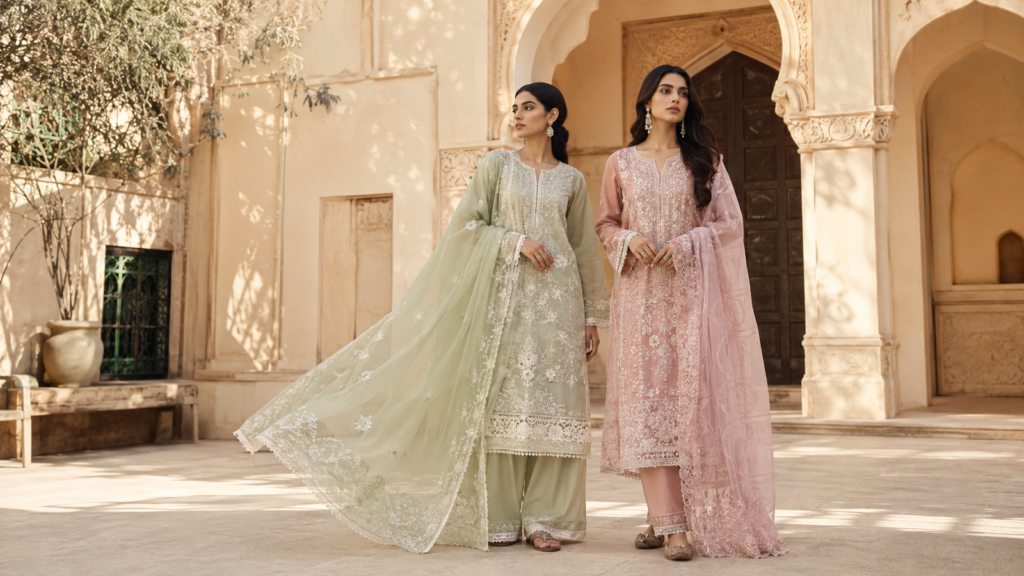
Featured image: Feyorawears editorial illustration.