
A new colour can refresh familiar outfits, but it can also become a piece that waits for several additional purchases. Before deciding, check how the specific shade works with your actual clothes rather than relying on the colour name alone.
The question is not whether you are allowed to wear the colour. It is whether this particular garment has a useful place in the wardrobe you want to build.
Choose the role of the new colour
Decide whether it will be a main garment, a trouser, a dupatta or a small accent. A colour you enjoy near your face may serve a different role from one you want as a contrasting bottom. Your preference can change with the complete outfit.
Identify two existing pieces you hope to wear with it. If no combination comes to mind, keep that uncertainty visible rather than assuming a match will appear later.
Compare actual references where possible
Place existing garments together in similar light and take reference photographs for your own notes. If a seller offers a swatch connected to the intended item, it may help with a close colour comparison. Confirm what the sample represents.
A screen image can guide a shortlist but may not reproduce every shade accurately. Ask for comparable actual-item views when the match matters. Avoid treating two items both called “ivory” or “sage” as identical.
Try a three-outfit test
Imagine adding a muted rose dupatta. Test the idea with your cream suit, a navy kurta and a printed shirt that contains a related shade. You do not need all three to work, but the exercise shows whether the purchase is a versatile separate or a single-outfit choice.
Either result can be worthwhile. The important point is to know which one you are buying. A special piece for one planned occasion should not be justified by combinations you do not actually like.
Decide how much contrast you want
Try a close shade, a clear contrast and a quieter neutral beside the proposed colour. Consider where you want attention to fall. A strong border may be enough of a focal point without adding another prominent accessory.
These are styling choices rather than fixed rules about complexion, age or body shape. Use the combination you enjoy wearing and the level of visibility that suits the occasion.
Check the total commitment
- Which existing outfits will the piece complete?
- Does it require another bottom, layer or accessory?
- Is the shade confirmed well enough for your purpose?
- Would you still choose it as a single-outfit purchase?
- Does its shape work as well as its colour?
If the colour is appealing but the cut is unsuitable, do not assume enthusiasm for the shade will solve the fit. Save the colour idea and look for a garment that meets both requirements.
Once a combination works, add it to your outfit record. That gives the new colour a practical role instead of leaving it as an isolated shopping inspiration.
For the next step, read comparing dupatta colours online and recording successful outfit combinations.
Compare a new shade in the women’s essentials collection with the specific garments you intend to wear beside it.
Continue exploring Wardrobe Planning or browse the Feyorawears Style Journal.
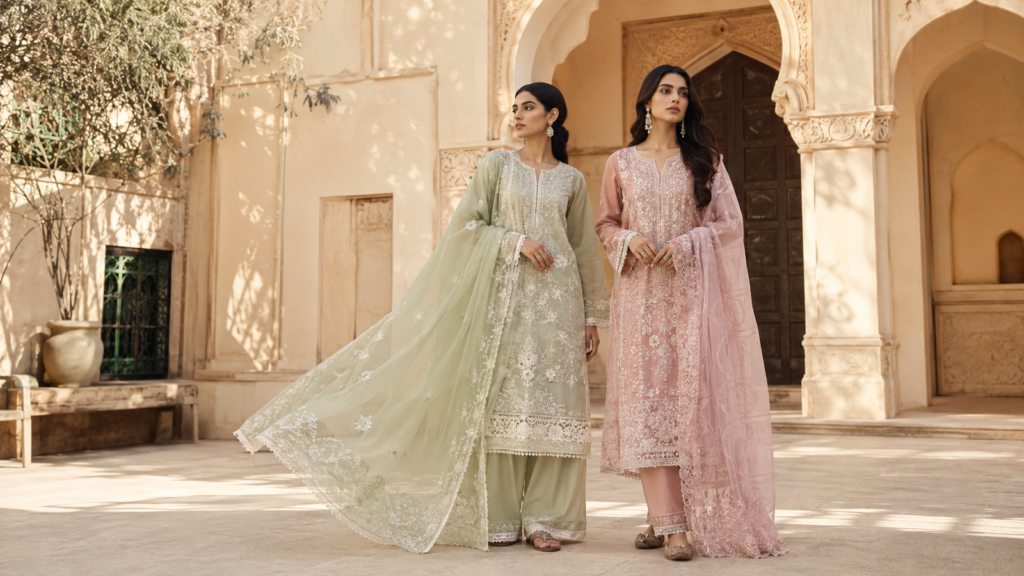
Featured image: Feyorawears editorial illustration.