
A trouser chart may give a waist measurement and total length while leaving out the information you need about where the waistband will sit. Rise is worth discussing when that position matters to your comfort or to the proportions of a kurta outfit. Ask how the seller measures it, and compare the actual garment with a reference pair rather than trying to solve every fit question from the waist number alone.
Describe your preferred waistband position
Put on trousers you enjoy wearing and note where you naturally position the waistband. Sit and stand without moving it for the mirror. Explain whether you want the new pair to sit in a similar place or whether you are intentionally planning something different.
Your preferred position is part of the fit brief. It should not be inferred from a model photograph or from the way a product is styled with a cropped or long shirt. A clear description helps the seller or tailor understand the result you want.
Ask what is being measured
Request a diagram or explanation for front rise and back rise if those figures are available. Ask where each measurement begins and ends, and whether the waistband is included. Keep the method with the numbers instead of assuming every chart follows an identical convention.
If you measure a reference pair, follow the same method where practical. Do not stretch the garment to obtain a preferred figure. Where the construction differs, tell the tailor so the comparison can be assessed in context.
Read rise alongside the other dimensions
Rise does not replace waist, hip, thigh or length information. Consider the whole garment and the shape you intend to wear. A concern that appears near the waistband may need a professional assessment of several areas rather than an isolated change to one measurement.
For example, a shopper may like the standing position of a pair but keep adjusting it after sitting. That observation is useful to demonstrate at a fitting. It is not enough evidence to prescribe a particular alteration without examining the garment.
Make a short enquiry before ordering
- Where is this waistband intended to sit?
- Are front and back rise measurements available?
- How are those measurements taken?
- Does the chart describe the finished garment?
- Can the relevant dimensions be compared with my reference pair?
Review elastic and fixed waistband comparisons for the waist area itself. If the trousers will accompany a short shirt, the short-kurta proportion guide connects waistband position with the visible outfit.
Browse women’s essentials with a complete fit question. Asking about rise adds context to a size chart and can make the difference between a number that appears suitable and a garment whose intended position you actually understand.
Continue exploring Tailoring & Fit or browse the Feyorawears Style Journal.
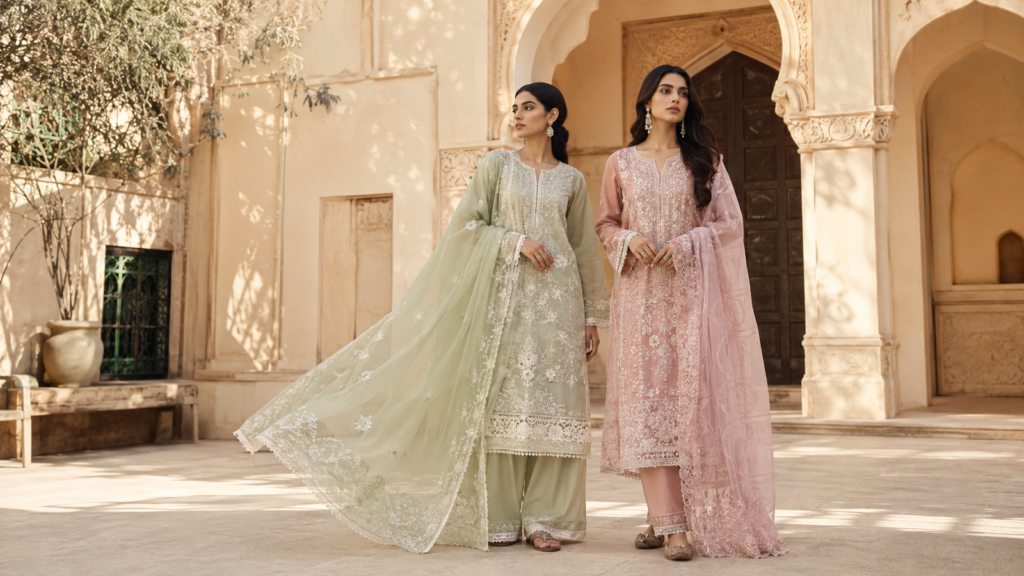
Featured image: Feyorawears editorial illustration.