
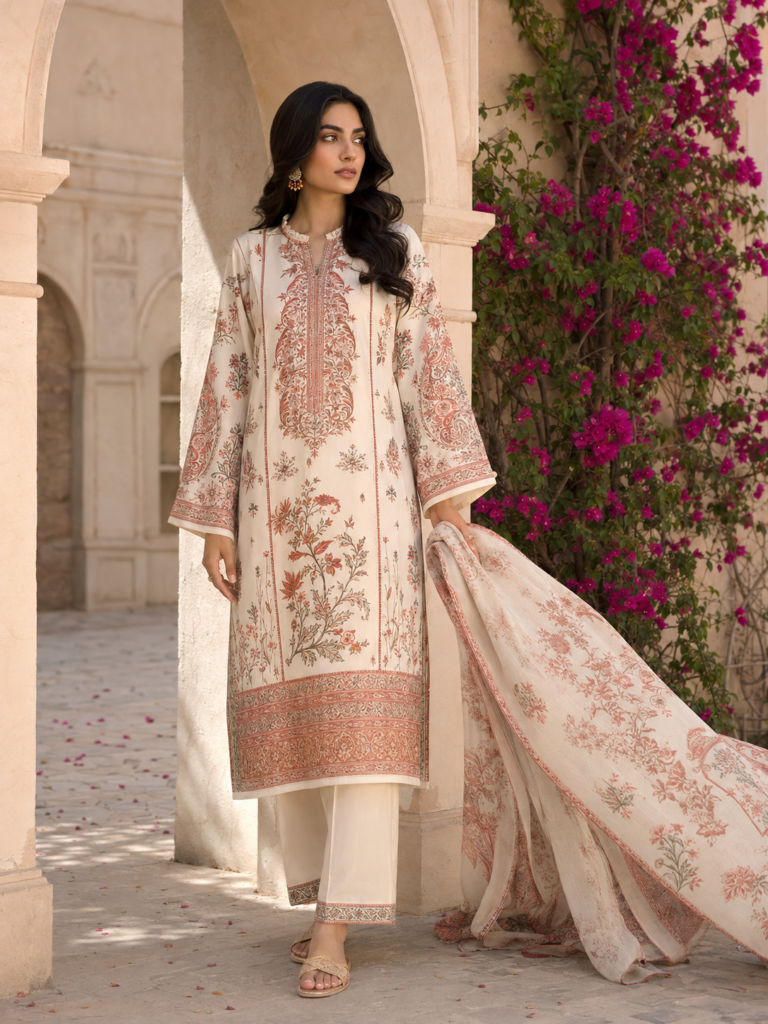
When two occasion outfits appeal for different reasons, another scroll through their photographs rarely resolves the choice. One may have the neckline you love; the other may suit the venue and require fewer adjustments. Put those differences on one sheet so you can decide what matters for this event.
This method works best after you know the date, setting and amount of movement involved. It is a personal decision tool, not a universal scoring system for clothing quality.
Write three requirements before assigning points
Choose the conditions the outfit must meet. For example: comfortable while seated for dinner, ready before the travel date, and complete within your spending limit. Treat these as requirements rather than preferences that an attractive colour can cancel out.
Below them, list optional preferences such as a particular neckline, a coordinated dupatta or an unusual sleeve detail. Keeping the two groups separate makes the final comparison clearer.
Build a small comparison sheet
Use rows for the actual decisions: fit evidence, included layers, closure access, care requirements, preparation time and complete cost. Add a column for unanswered questions. Record evidence rather than vague words such as “luxurious” or “better.”
For each personal preference, assign a weight from one to three. Give more weight only to what matters to your event. Then rate how well each outfit meets it after you have the relevant information. Leave unknowns blank; a blank is not a pass.
Try a worked example
Imagine Outfit A has your preferred embroidery but needs a hem alteration. Outfit B has quieter detailing and a confirmed length close to a garment you own. Both appear within the purchase budget, but only A needs a tailoring appointment.
Write the alteration quote and appointment date beside A. If the tailor cannot confirm completion before departure, A fails a requirement even if it scores highly for appearance. B may become the practical choice without being declared the superior garment in every respect.
If both meet the deadline, compare your priorities again. You may decide the extra work is worthwhile. The sheet helps you see the trade-off rather than telling you which aesthetic to prefer.
Include the whole outfit cost
- Record the listed clothing price and confirmed delivery charge.
- Add necessary tailoring or alterations.
- Add a missing slip, trouser or dupatta only if you will actually buy it.
- Include any preparation cost you have established.
- Keep optional accessories separate from required spending.
Do not count pieces you already own as new purchases. Equally, do not omit a required component simply because it appears in the campaign photograph.
Make the decision, then stop reopening it
Resolve any final uncertainty and save the product specification you used. Write one sentence explaining the choice: “This meets the date and seated-fit requirements, and I can wear it with my existing shoes.”
That sentence is a useful check against impulse additions. A decision sheet should simplify shopping, not become a reason to keep comparing indefinitely.
For the next step, read calculating an outfit’s complete cost and planning spending around your calendar.
Use the luxury pret collection to build a shortlist around the requirements you have already written.
Continue exploring Quality & Buying or browse the Feyorawears Style Journal.
Featured image: Feyorawears editorial illustration.