The fabric price is only one line in an unstitched outfit budget. To compare options fairly, estimate what it will take to turn each set into the garment you intend to wear. The most useful calculation starts with a defined design, not a general request for “stitching charges.”
Use written quotations where possible. Prices in the example below are invented for arithmetic and are not feyorawears prices, tailoring quotes or a guide to prevailing market rates.
Describe the finished outfit before requesting a quote
Specify the shirt silhouette, sleeve length, trouser shape and any intended lining. Identify embroidered panels or trims that need attaching. Ask whether the quote includes fitting appointments, finishing and agreed adjustments, or whether some work is charged separately.
If the tailor has not inspected the fabric or dimensions, mark the quote provisional. A useful estimate tells you what it assumes. An unexplained total can conceal different interpretations of the same design.
Use five cost lines
- Fabric or unstitched set: the confirmed purchase price.
- Construction: cutting, stitching and finishing covered by the quote.
- Additional materials: lining, closures or trims not already included.
- Completion: any separately quoted adjustment or preparation.
- Getting it ready: delivery and necessary transport costs you choose to include.
Keep optional embellishment separate. This lets you remove a decorative addition without losing sight of the cost of making the basic outfit wearable.
Work through a hypothetical budget
Suppose a fabric set costs PKR 6,000. Your agreed tailoring quote is PKR 2,500, additional lining is PKR 700 and necessary transport is PKR 300. The planned total is PKR 9,500 before any optional additions.
If you then choose a PKR 500 decorative trim, the total becomes PKR 10,000. The calculation explains the change instead of allowing the extra to disappear into a vague tailoring figure. These amounts are simply a worked example; replace every one with your own confirmed numbers.
Compare that total with another option only after checking the same scope. A cheaper stitching quote that excludes lining attachment is not directly comparable with one that includes it.
Record uncertainty without pretending it is a quote
Add a short “not yet confirmed” section for items such as additional fabric or a second fitting visit. Resolve the largest unknowns before purchase. If you choose to set money aside for unforeseen work, label it your reserve rather than a charge the tailor has promised.
Do not assume more fabric will be available later in the same shade. Ask about quantities before cutting, especially when the design depends on a particular border or panel.
Close the budget when the scope changes
If the neckline, sleeve or silhouette changes, ask for an updated quote and completion date. Save the new agreement alongside the earlier one so you can see which version applies.
The goal is a complete, understandable total. A carefully planned unstitched outfit may still be your preferred purchase even when it costs more than the fabric label first suggested.
For the next step, read writing a clear tailoring brief and comparing two occasion outfits.
Take the listed contents from the unstitched collection into your tailoring discussion before finalising the budget.
Continue exploring Quality & Buying or browse the Feyorawears Style Journal.
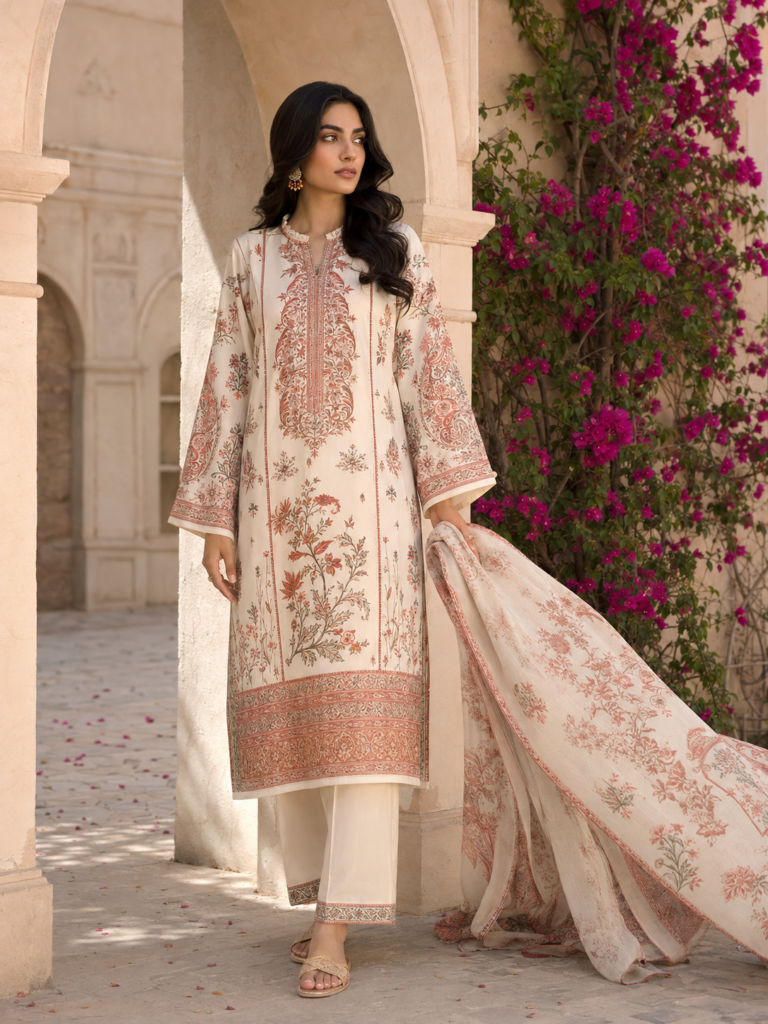
Featured image: Feyorawears editorial illustration.