
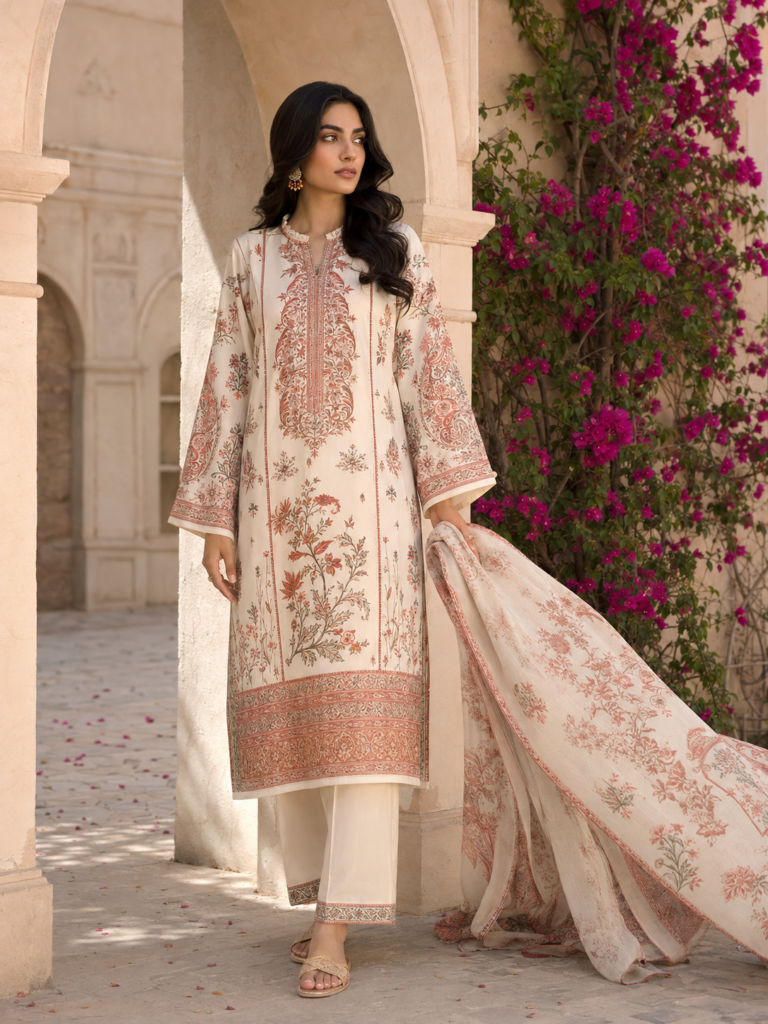
A complete suit and a collection of separates are different starting points for the same task: assembling something you will wear. Comparing the suit’s total with the price of a single shirt does not tell you which route suits your wardrobe or budget.
Begin by defining the finished outfit. If you wear a shirt and trousers with an optional dupatta, write that down. Your comparison should follow your actual use rather than an assumed requirement to purchase every possible component.
Make an equivalent outfit on each side
Draw two columns, one for the set and one for separates. Under each, list the shirt, trousers, dupatta and any underlayer you intend to use. Mark every item as included, already owned, additional purchase or unconfirmed.
An existing pair of trousers can make separates a practical choice, but only if you have checked it with the planned shirt. A matching colour name is not enough to establish that the pieces work together in proportion or shade.
Use a worked comparison without inventing a winner
Suppose the complete suit includes a shirt, trousers and dupatta. The alternative is a separate shirt paired with trousers you already own. You would still need a dupatta if you want one for the occasion.
The separates column should therefore include the shirt and the new dupatta, with your existing trousers marked as owned. The suit column should include any alteration the supplied trousers need. Add confirmed delivery charges to both routes.
One option may cost less while the other gives you a combination you prefer. The sheet makes that trade-off visible; it does not require the least expensive option to win.
Compare fit evidence component by component
A coordinated set can still have different fit questions for its top and bottom. Check the relevant measurements for each. With separates, you can choose different sizes where offered, but you also need to check how the pieces sit together.
- Compare shirt length with the rise and shape of the trousers.
- Check whether the neckline and sleeves work with the chosen underlayer.
- Confirm the dupatta dimensions and how you plan to carry it.
- Identify alterations before treating either outfit as complete.
Do not count an uncertain size as a solved problem simply because it belongs to a matching set.
Test the pieces beyond the first outfit
If repeat use matters, name one further combination for each new piece. Be realistic: “I could wear these trousers with my navy kurta” is useful only after checking that pairing. A theoretical list of endless combinations can make almost any purchase sound versatile.
For a set, decide whether you will enjoy the components separately or mostly together. Both are valid, but they represent different kinds of value to you.
Keep the decision focused
Save the completed two-column note and choose based on the outfit, total cost and evidence you have. Resist adding more accessories just to make one side appear comparable. The best comparison stays tied to the clothing you actually need.
For the next step, read finding missing separates and making a realistic cost-per-wear estimate.
Compare the women’s essentials collection with the pieces already in your wardrobe before adding another complete set.
Continue exploring Quality & Buying or browse the Feyorawears Style Journal.
Featured image: Feyorawears editorial illustration.