
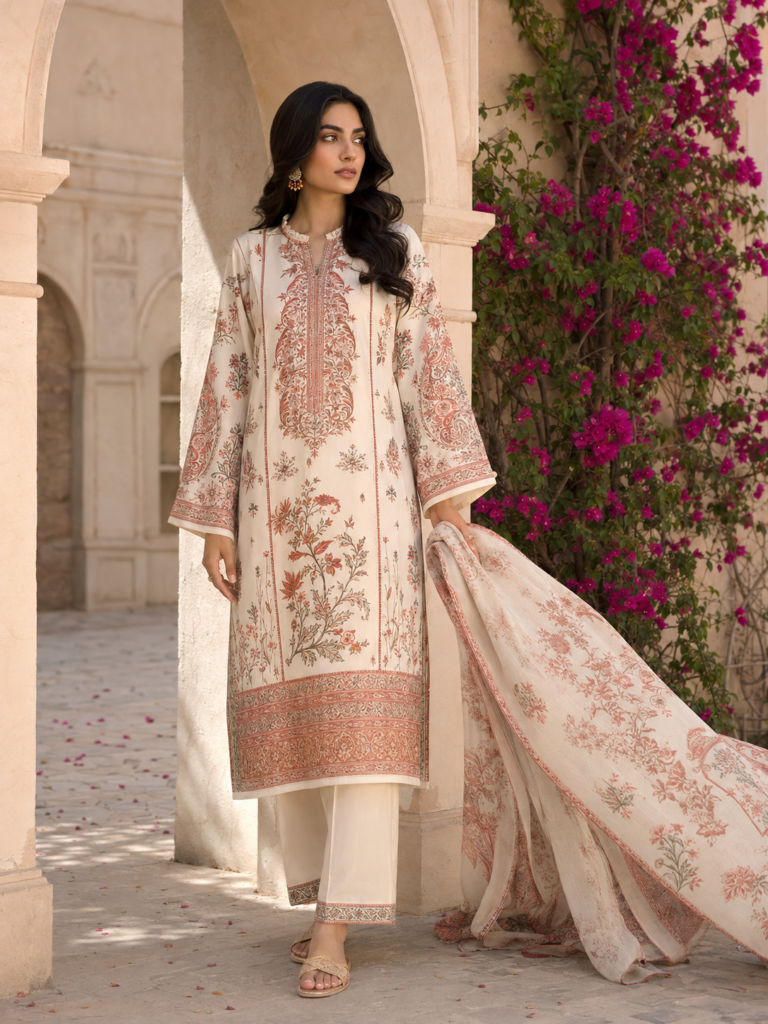
“Handwork” can be an attractive phrase in a clothing listing, but it is not a complete explanation of how the garment was made. A shirt may combine machine embroidery, separately attached decoration and finishing performed by hand. Before using the technique as a reason to buy, ask which part of the item the description refers to.
The objective is an accurate account of the work, not a contest in which one method automatically wins. Your priorities may be placement, finish, comfort, appearance or the ability to manage the garment’s care.
Break the description into components
Make a short list of the decorated areas and ask about each one. A general answer about the neckline may not apply to the sleeves or hem. Likewise, a claim about attaching beads does not tell you how the embroidered base was produced.
Ask the seller to distinguish the base embroidery, added embellishments and final assembly. If the item uses a decorative patch made separately, record that too. Avoid filling a missing explanation with what you think the technique looks like in a photograph.
Use questions that can receive factual answers
- Which sections are embroidered by machine?
- Which sections have work added by hand?
- Are any panels or trims purchased ready-made and attached?
- Does the supplied item include every decoration shown?
- Is there a close-up of the actual work and its reverse?
A seller may not know every production detail. “Not confirmed” is a useful answer because it tells you not to rely on the claim. It is better to choose on verified features than build a purchase around an uncertain label.
Compare two descriptions in practice
Imagine two evening shirts. The first is described as “handworked” without further detail. The second specifies machine embroidery with hand-attached beads at the neckline. The second description gives you more precise information, even though the first sounds more exclusive.
Ask the first seller for the same level of detail. Then compare the actual placement, interior finish, care instructions and complete price. If your concern is catching decoration on a dupatta, the location of the beads may be more important to your use than the method used for the base embroidery.
Separate technique from provenance
Workmanship claims do not establish a brand relationship. Similar motifs, a familiar collection reference or the words “designer style” do not show that a garment was made by the named fashion house. Keep the identity of the seller and the identity of the product clear.
Nor does a technique label prove fibre content, originality or durability. Those questions require their own evidence. Avoid treating one appealing detail as confirmation of several unrelated claims.
Record the explanation you used
Save the item code, photographs and the seller’s written description of the relevant work. On arrival, compare the supplied details with that record before making alterations. If something differs, ask about the specific difference while the garment remains in the condition received.
A considered purchase can celebrate decorative work while still asking straightforward questions about what it is.
For the next step, read checking embroidery backing and placement and handling an incomplete product description.
Explore the luxury pret collection with attention to accurately described details, rather than technique labels alone.
Continue exploring Quality & Buying or browse the Feyorawears Style Journal.
Featured image: Feyorawears editorial illustration.