
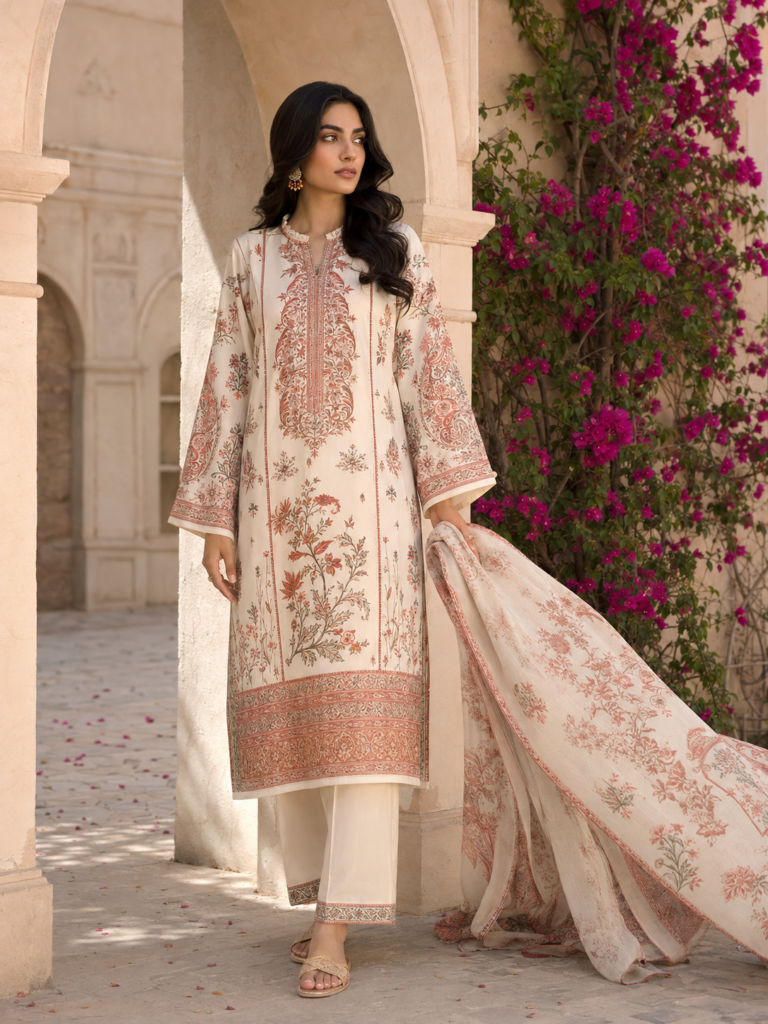
An incomplete product description can leave you asking several questions at once. Rather than sending a long general message, identify the information that could change your decision and ask for it in a clear order.
Start with the purchase itself: what will arrive, in which size or format, and in what condition? Decorative preferences can follow once those essential points are understood.
Sort missing details by consequence
Create three groups. The first contains facts required to make the purchase, such as whether the item is stitched and which components are included. The second contains fit and use details, such as measurements, lining and closures. The third contains preferences that may help you compare otherwise suitable options.
This order prevents a conversation about colour styling from distracting from a missing trouser or an unknown garment length.
Ask about one item with a clear reference
Include the product link or code, selected colour and intended size. If the listing offers multiple formats, name the one you mean. Avoid sending several similar screenshots without labels and expecting the seller to identify which question belongs to which outfit.
Use a numbered enquiry with short questions. A seller can answer each line directly, and you can see which lines remain unresolved.
Try a focused message
For an outfit described only as a “three-piece formal suit,” your message could ask:
- Is the supplied outfit stitched or unstitched?
- Which three components are included, and is any inner layer separate?
- What material is specified for each component?
- Where can I find the measurements for the selected option?
- Which parts of the photograph are styling accessories rather than included items?
If you have a fixed event date, add a separate question about availability and the relevant dispatch or delivery estimate. Do not blend that into a general request for “quick delivery.”
Distinguish an answer from a reassuring phrase
Words such as “premium,” “comfortable” or “same as picture” may express the seller’s view without resolving your question. If you asked about composition, request the stated fibres rather than interpreting a quality adjective as a material specification.
If the seller does not know, record that honestly. You can decide whether the uncertainty is acceptable for your purchase. There is no need to invent an answer from the price, fabric name or a designer reference.
Build the final specification from confirmed information
Move answered questions into a short order note. Keep unresolved points visible until you decide whether they are essential. If a later response changes the contents or price, review the whole choice again rather than treating the change as an isolated detail.
For example, confirmation that a pictured slip is not included may affect coverage, fit and cost together. Ask whether your own underlayer will work before assuming the extra can be solved after delivery.
A concise enquiry should leave you with a concrete understanding of the item. When the important facts remain unclear, a different listing may simply be easier to assess.
For the next step, read asking for actual-item photographs and saving the confirmed order specification.
Use the feyorawears collection as a starting point, then clarify any item detail that matters to your decision.
Continue exploring Quality & Buying or browse the Feyorawears Style Journal.
Featured image: Feyorawears editorial illustration.