
A number beside a familiar fabric name can make a listing sound precise even when its meaning is not explained. If you see linen 7272 in a suit description, do not assume that the number confirms fibre content, thread count or a quality grade. Start by asking the seller what the notation means for that actual product and what documentation supports the explanation.
Keep the code and the composition separate
Write linen 7272 exactly as it appears in the listing. In a separate field, record any documented fibre names and percentages. If none are supplied, leave composition unconfirmed. The presence of a number should not fill an information gap by implication.
This also prevents an unfamiliar code from being expanded differently in later conversations. Your tailor, the seller and the buyer should all be able to distinguish the wording on the page from a verified material statement about the cloth being supplied.
Ask one direct clarification question
A useful message is: what does 7272 refer to in this item, and can you provide the corresponding supplier specification? Add the exact product reference and selected colour or variant. If the reply refers to another listing, ask whether it applies to your choice as well.
A seller may explain the notation as part of its own range or supplier description. Record the scope of that answer rather than presenting it as a universal textile definition. If the meaning remains unresolved, say so plainly in your purchase notes.
Continue the practical product checks
Even a clarified code does not answer every buying question. Confirm the supplied shirt and trouser lengths, fabric widths, decorative components and the dupatta or shawl details. Ask whether any finishing or additional material is needed for the silhouette you have in mind.
For example, a shopper may understand the supplier’s notation but still discover that a fixed embroidered border affects the proposed shirt length. The useful decision comes from the complete specification and tailoring plan, not from decoding one number alone.
Decide how important the missing information is
List the questions that would change your choice. If composition is essential to your preference, an unexplained label may be enough reason to wait for a clearer answer. If your concern is the supplied layout, show the documented dimensions to your tailor before proceeding.
Avoid informal tests that claim to identify fibres from a photograph, touch or burning a sample. Ask for appropriate product information instead. No fabric code should become an unsupported promise of warmth, durability or a particular care routine.
Read the linen-blend label guide for the title-versus-specification distinction. Use fabric length questions for your tailor once the supplied pieces are clear.
Browse unstitched clothing with the code recorded accurately and its limitations understood. Precision comes from an explained specification, not merely from a number printed beside a fabric name.
Continue exploring Dhanak & Winter Fabrics or browse the Feyorawears Style Journal.
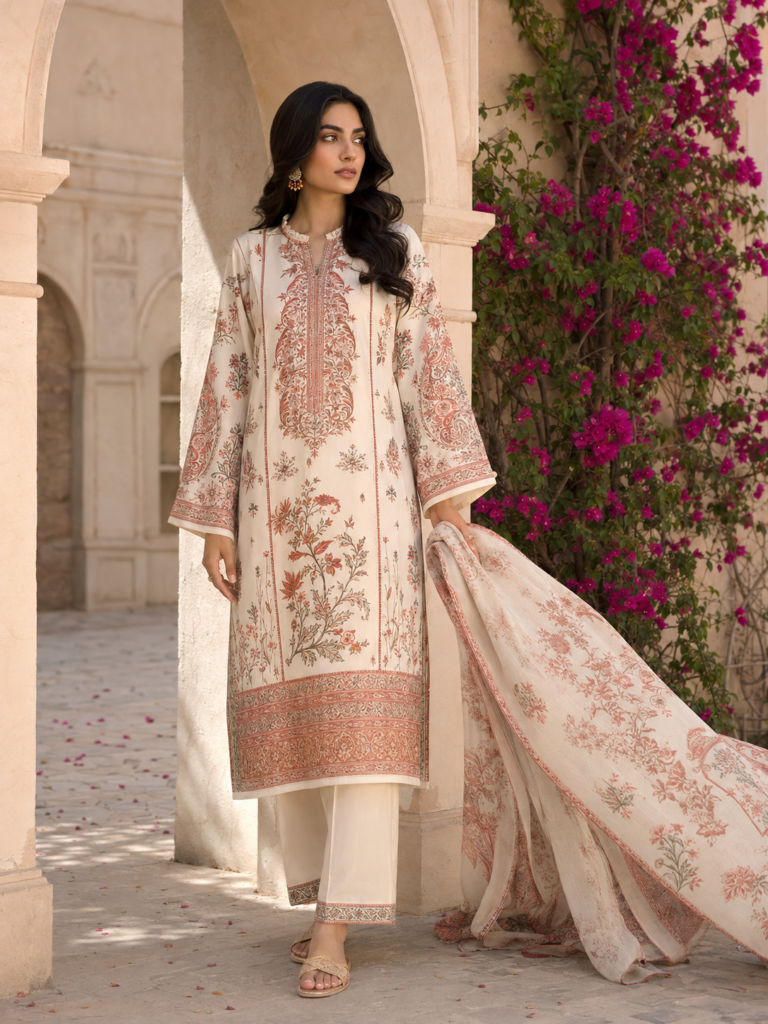
Featured image: Feyorawears editorial illustration.