
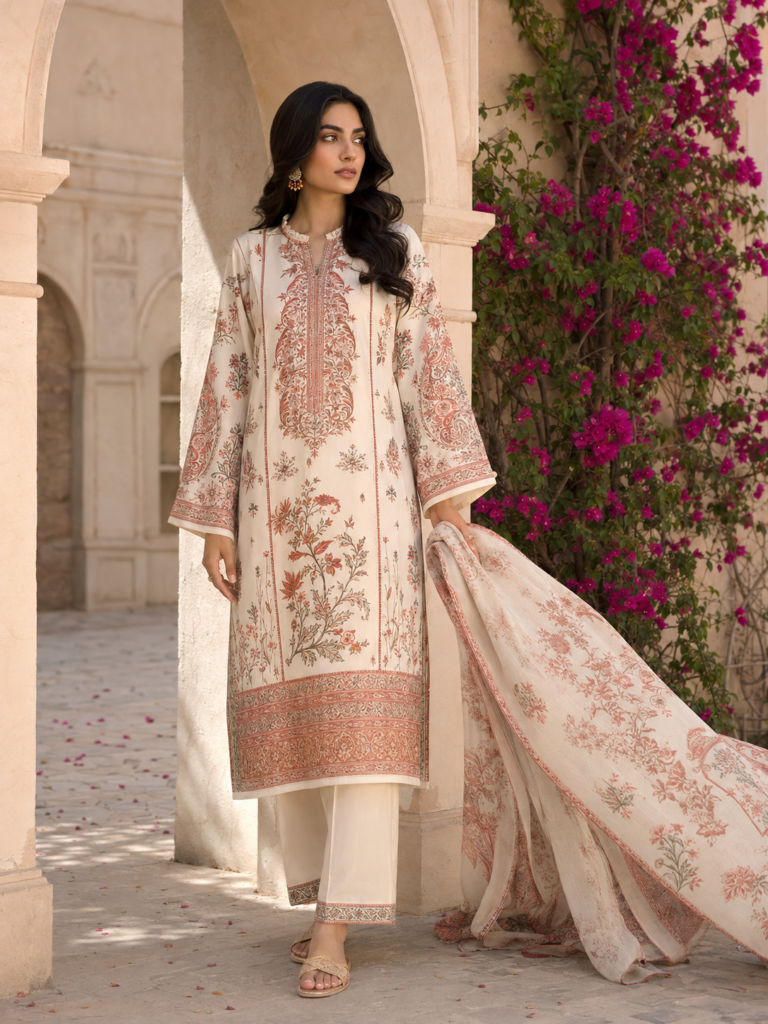
A suit photographed with a shawl can look complete before you have read what the purchase includes. Take a moment to separate the visual presentation from the component list. For a Dhanak-labelled set, the cloth name may refer to only part of the outfit, and the shawl may have its own description. Knowing exactly what you will receive makes both shopping and tailoring easier to organise.
Give every component its own line
List the shirt, trousers, shawl, lining and any separate borders or patches mentioned. Mark a component included only when the listing or seller confirms it. Accessories used for styling should not enter the list by assumption.
For each included piece, record the material wording, dimensions or supplied quantity and any finishing already completed. If the seller uses one general fabric description for the whole set, ask whether it covers every component. Leave fibre percentages unconfirmed unless appropriate information is provided.
Examine the shawl as a separate purchase
Consider its finished length and width, edge detail and the part of the outfit it will cover. Decide whether you want it to remain visible indoors or to serve as a removable layer. That choice affects how much attention you should give to its border placement and how you plan to carry it.
Ask whether the shawl shown is the exact supplied piece and whether its edging is complete. If it arrives with separate trim, include attachment in the tailoring plan. Do not assume a shared colour means the shawl and shirt share a composition or care routine.
Plan a complete look before cutting
Suppose the shirt has a decorated hem and the shawl has an equally noticeable border. Arrange the components together before deciding on the shirt length. You might choose to show both details, or keep one less prominent when the outfit is worn.
Photograph the arrangement for your tailor and identify which elements are fixed and which are optional. If a design change would use a supplied border elsewhere, ask about the consequences before anything is cut. A clear plan is easier to discuss than a general request to make it like the model.
Confirm the remaining work
- Identify which edges require finishing.
- Allocate each loose patch or border to a component.
- Discuss any separate lining or additional cloth.
- Agree on the intended shirt and trouser silhouette.
- Keep the actual care information with the completed outfit.
Use planning a dupatta and shawl together if you expect to wear both. The composition-label guide helps keep the materials of a multi-piece set distinct.
Browse unstitched sets with a component record in hand. A well-considered shawl suit is one whose parts you understand and want to use together, rather than a photograph whose missing details you discover only at the tailor’s appointment.
Continue exploring Dhanak & Winter Fabrics or browse the Feyorawears Style Journal.
Featured image: Feyorawears editorial illustration.