
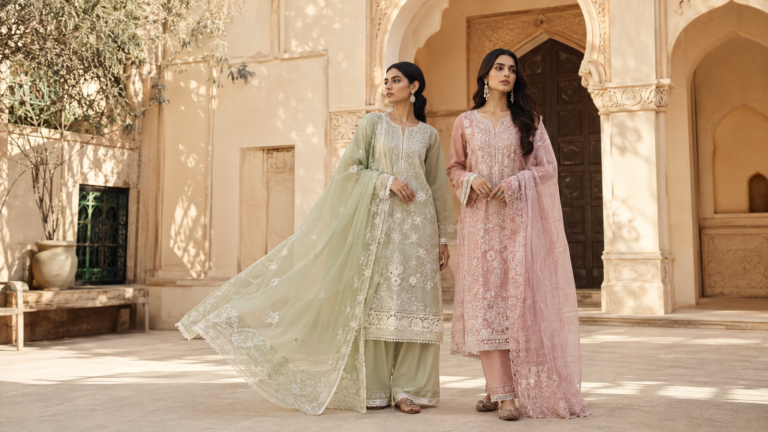
Turn an Unstitched Suit into a Clear Tailoring Brief
Create a clear tailoring brief for an unstitched suit with component photos, design priorities and written decisions, so the finished outfit reflects your choices.
Prepare measurements, garment proportions and a clear tailoring brief before an outfit is cut or altered.
Create a clear tailoring brief for an unstitched suit with component photos, design priorities and written decisions, so the finished outfit reflects your choices.
Plan embroidered borders before cutting by mapping each supplied piece, choosing its visible position and agreeing on joins and changes with your tailor.
Choose a shirt length around a fixed hem border by reviewing the supplied panel, your preferred proportions and the tailor’s layout before anything is cut.
Compare straight, A-line and flared kameez ideas through the actual garment outline, supplied fabric and movement you prefer before finalising a tailoring plan.
Plan a short kurta with wide trousers by comparing shirt and waistband placement, visible trouser length and your preferred balance from front and side views.
Balance a long kameez with straight trousers by checking the visible trouser section, shirt openings and footwear together before fixing either finished length.
Observe kurta shoulder fit before requesting alterations, using front, side and movement checks to describe the issue without diagnosing the pattern yourself.
Compare set-in and drop-shoulder sleeve measurements by checking where each measurement starts, then use a familiar garment to explain the finished reach you want.
Assess kimono-labelled sleeves in a Pakistani outfit through ordinary reach, side coverage and cuff position, with clear observations to discuss at a fitting.
Check sleeve openings and cuffs for everyday use by testing reach, wrist accessories and garment access, then record the exact change you want at the fitting.