
When one suit is described as Dhanak and another as linen, it can be tempting to assign each a season and decide immediately. That shortcut leaves too much unresolved. Read the actual listings and build a comparison around the garments you would receive. The important questions are what the seller can verify, how the components work together and what the finished outfit would need to do for you.
Read seasonal wording as part of the listing
A seasonal label is not the same as a complete fibre statement. For example, Gul Ahmed’s MN-CS-WS25-286 shirt is listed for winter and discloses cotton, linen and viscose percentages. This men’s garment is a narrow example of explicit blend disclosure, not evidence about the composition or warmth of women’s linen-labelled suits.
For your candidates, copy the exact material statement and ask for any missing composition details. Do the same for Dhanak rather than substituting a standard recipe that the seller has not supplied.
Compare components in matching rows
Put shirts against shirts and trousers against trousers. If one set includes a shawl and the other a dupatta, give those pieces their own row. Note their dimensions, decoration and the role you expect them to play in the outfit.
This avoids comparing a full outfit with a partly assembled plan. If you would need to add a separate layer or lining, include that in the discussion and budget. Ask your tailor to assess the actual materials rather than relying on a fabric name alone.
Use one realistic scenario
Imagine you want a suit for a day that includes a commute, several hours indoors and a short visit afterwards. List what you want to carry, remove or adjust between those settings. A candidate with an elaborate shawl may be visually appealing, but you should still decide where it will go when not worn.
The other candidate may need a separate layer you already own. Try that layer over a similar silhouette before assuming the combination will be straightforward. The exercise compares your plans, not an unsupported claim that one cloth performs better everywhere.
Choose after the unknowns are visible
Keep three headings beside each option: confirmed details, preferences and open questions. A design you love can remain on the shortlist while you request evidence. If a crucial answer never arrives, you can decide whether to pause rather than quietly treating it as confirmed.
The Dhanak listing guide helps identify what the term actually refers to. The cotton-linen and viscose-linen comparison examines how to read blend descriptions without inferring ratios.
Browse unstitched outfits when you can compare the complete plans. A considered purchase comes from the information and use case together, not from a simple season assigned to a single word.
Continue exploring Dhanak & Winter Fabrics or browse the Feyorawears Style Journal.
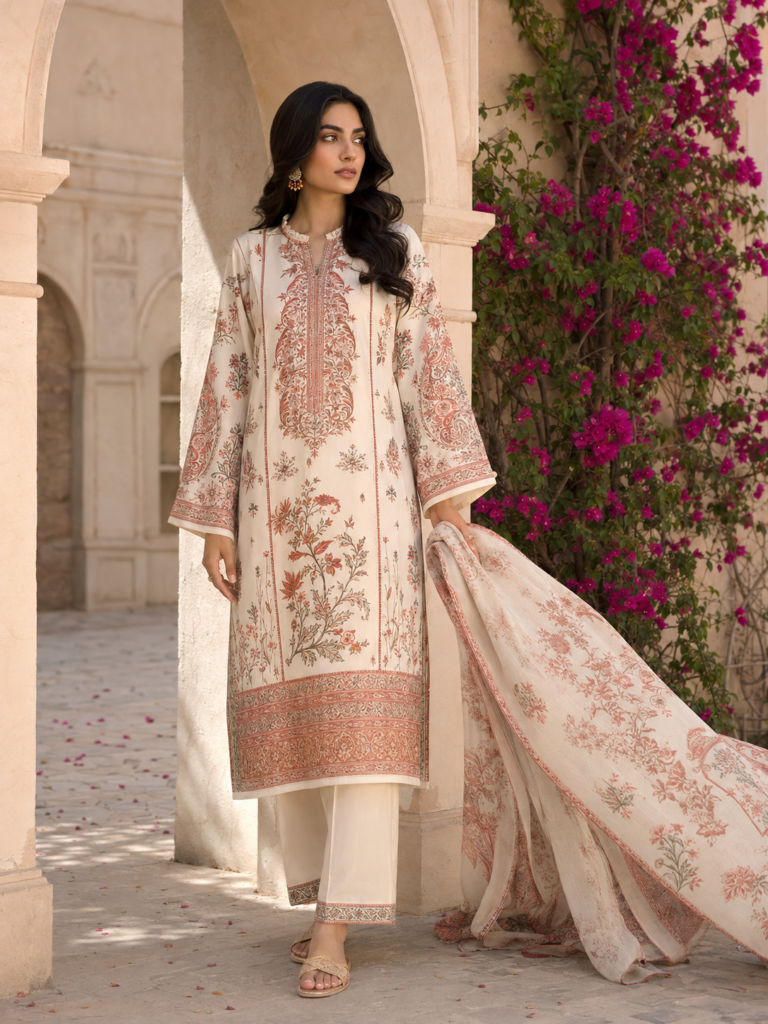
Featured image: Feyorawears editorial illustration.