
A useful Dhanak-versus-khaddar comparison begins with two item references, not a ranking of fabric names. The suits you are considering may differ in composition information, dimensions, decoration and what still needs tailoring. Give each difference its own place in the comparison. That way, you can choose the outfit that suits your plans without turning an incomplete description into a universal claim about either material.
Build a two-item worksheet
Create rows for the shirt, trousers and any dupatta or shawl. For each item, record the seller’s material wording and any documented fibre percentages. Add separate rows for dimensions, supplied fabric lengths, finishing and care information. Mark missing details clearly.
A primary listing can demonstrate why component-level reading matters. Khaadi’s KD08BST-VG_MULTI details specify cotton khaddar for the shirt and trousers, with a viscose-cotton shawl. That is information about one set; it should not be transferred to every khaddar suit or another retailer’s stock.
Compare the job the outfit needs to do
Describe the actual occasion in a few lines. You might need a suit for regular office use with an outer layer during the journey, or for short daytime visits. Note how you prefer the neckline, sleeves and trousers to fit in that setting.
This does not establish a thermal rating for either candidate. It gives you a practical basis for asking about the actual garment and deciding whether you can assess it adequately. Where comfort is uncertain, use a physical reference you already enjoy wearing.
Keep decoration and material separate
Suppose the Dhanak-labelled option has an embroidered front while the khaddar-labelled option has a quieter print. You may prefer one because of its design rather than its cloth description. Say that explicitly in your notes so the decision remains clear.
Then calculate any additional work each option requires. Attached decoration, loose patches and proposed edging can create different tailoring discussions. Compare the full plan instead of treating the purchase price as the only difference.
Resolve the information gaps in order
- Ask first about an unknown that could rule an item out.
- Confirm the supplied components and their dimensions.
- Discuss the intended silhouette with your tailor if needed.
- Read the actual seller’s terms before committing.
- Record which remaining differences are personal preferences.
If the Dhanak label itself is unclear, start with how to read that term in a listing. For the separate materials within a set, see reading composition piece by piece.
Check that quantities use the same units on both sides of the worksheet. Keep original figures beside conversions so your tailor can verify them.
Explore unstitched sets once both columns contain comparable information. The strongest choice is the documented outfit that fits your requirements, not the option whose fabric name sounds more suitable in isolation.
Continue exploring Dhanak & Winter Fabrics or browse the Feyorawears Style Journal.
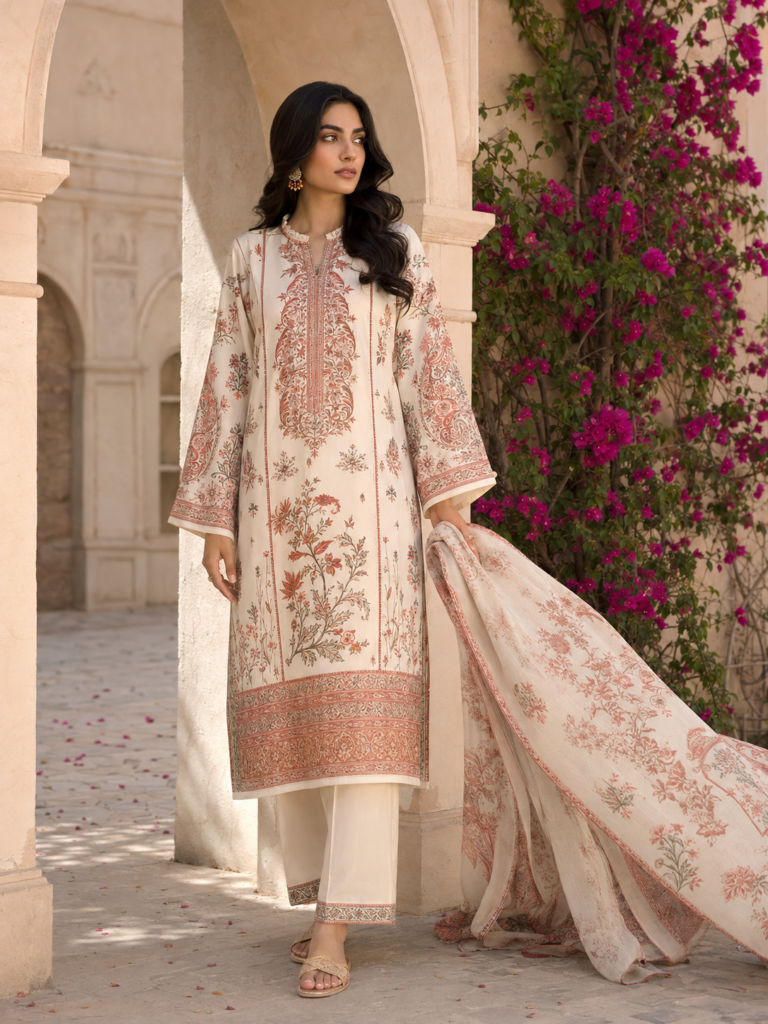
Featured image: Feyorawears editorial illustration.