
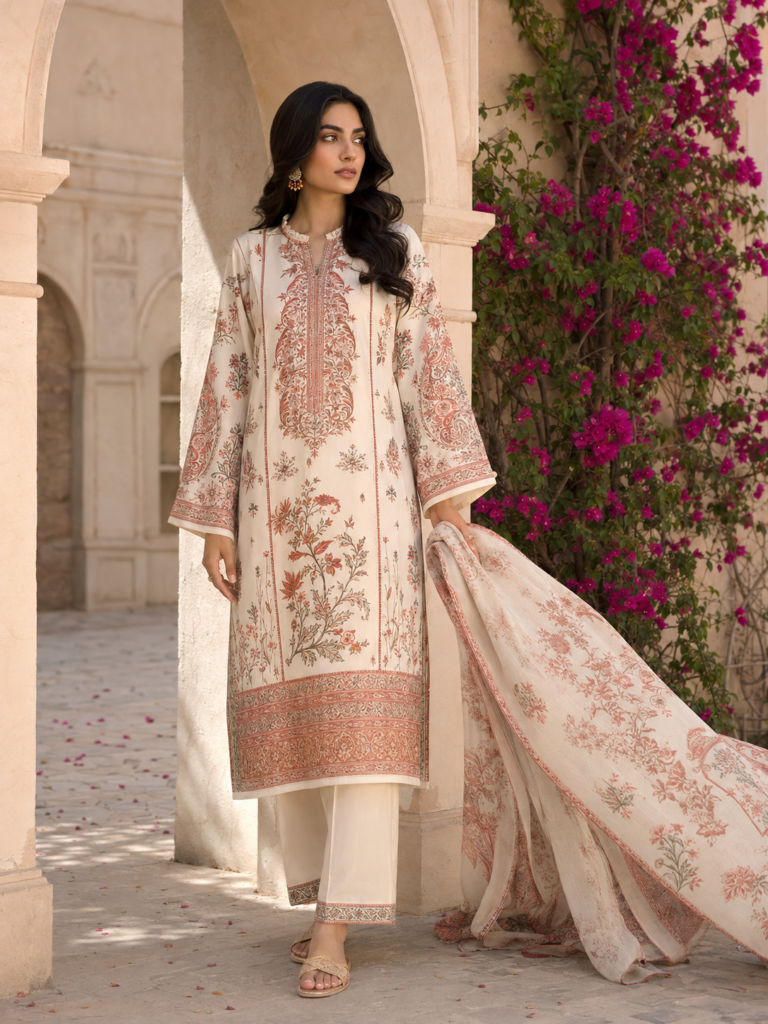
Karandi can be the beginning of a shortlist, but it should not be the end of your questions. A useful purchase decision considers the particular surface, the shape you want and the coverage you prefer. Keep these practical observations separate from the material specification. That allows you to enjoy a design without making unsupported assumptions about everything sold under the same name.
Read the description without expanding it
Record the exact fabric wording and any fibre information supplied. If the seller names several materials without percentages, ask whether a more complete specification is available. Do not turn a brief label into a standard recipe in your own notes.
Pay attention to which component the wording describes. The shirt, trousers and dupatta may have separate entries. If an overall sentence appears to conflict with a specific field, request clarification for your selected item and colourway before treating either as settled.
Ask for texture views that support your decision
A close-up can help show the appearance of a surface detail, while a wider view shows how prominent it looks across the garment. Request both if texture is central to your choice. Compare images at a similar scale rather than judging a large close-up against a distant outfit photograph.
For example, you might prefer a subtle surface beside a decorative neckline. Another shopper may want the texture itself to be the main feature. Neither preference proves a difference in material quality; it describes the visual result each person wants.
Plan the cut with the actual components
If the suit is unstitched, show its panel layout and quantities to your tailor alongside your proposed silhouette. Ask which design choices are straightforward and which need adjustment. Avoid assuming a photographed shape can be reproduced unchanged for every person from the same package.
If the suit is ready made, compare finished garment measurements with a suitable reference you own. Include seated movement and reach in the comparison rather than judging only a front-facing photograph.
Make coverage a separate check
Ask about lining, side openings and the areas that matter to your preferred coverage. Request relevant views without treating a dark colour or a fabric name as a guarantee. Consider how the dupatta and any outer layer will be arranged with the shirt.
Our Dhanak and karandi comparison helps organise two candidates without a universal ranking. The silhouette planning guide focuses on choosing the shape before tailoring begins.
Confirm whether the photographs show your selected variant before using them as the basis for a final decision.
Browse unstitched clothing with three clear notes: the surface you want to see, the shape you want to wear and the material information still required. That brief is more useful than selecting a fabric category and assuming all the remaining decisions have been made.
Continue exploring Dhanak & Winter Fabrics or browse the Feyorawears Style Journal.
Featured image: Feyorawears editorial illustration.