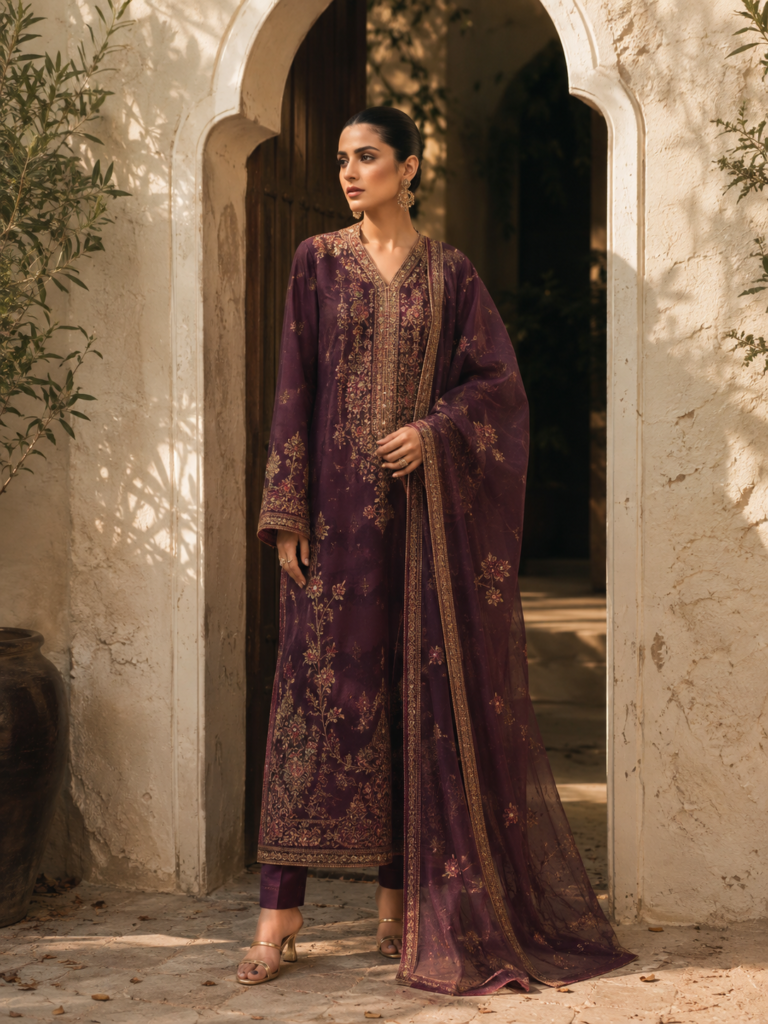
Pockets in a Tailored Suit: Placement Before Stitching
Plan pockets in a tailored suit by deciding what you will carry, testing placement and discussing the effect on seams, decoration and the finished outline.
Practical guides to Pakistani womenswear, thoughtful outfit ideas and everyday garment care. Explore Buying Guides, Style Notes and Comfort & Care.
Plan pockets in a tailored suit by deciding what you will carry, testing placement and discussing the effect on seams, decoration and the finished outline.
Record neckline depth and fastenings clearly in a tailoring brief, using a familiar garment and agreed measurement points to connect appearance, coverage and access.
Prepare for a first suit fitting with the right shoes, layers and written priorities, then review the outfit systematically and record agreed changes before leaving.
Check a tailored suit while seated as well as standing, reviewing the waistband, shirt, sleeves and preferred coverage through the movements of your ordinary day.
Style a contrast dupatta with accessories you already own by deciding what should connect, what can stay different and how much colour you want to show.
Create a component-by-component care record for a multi-piece suit, linking each label to the right garment and keeping missing instructions clearly identified.
Choose a storage approach by inspecting a garment’s shape, weight, layers and decoration, then follow its guidance instead of forcing every outfit into one method.
Prepare a heavily embellished outfit for time between events with a condition record, component inventory and construction-specific storage questions for its maker.
Keep detachable outfit details, spare buttons and styling accessories clearly labelled, with a small inventory that prevents missing pieces before an occasion.
Prepare a clear professional-cleaning handover with component names, care labels, observed marks and previous treatment notes, so the appointment starts with facts.